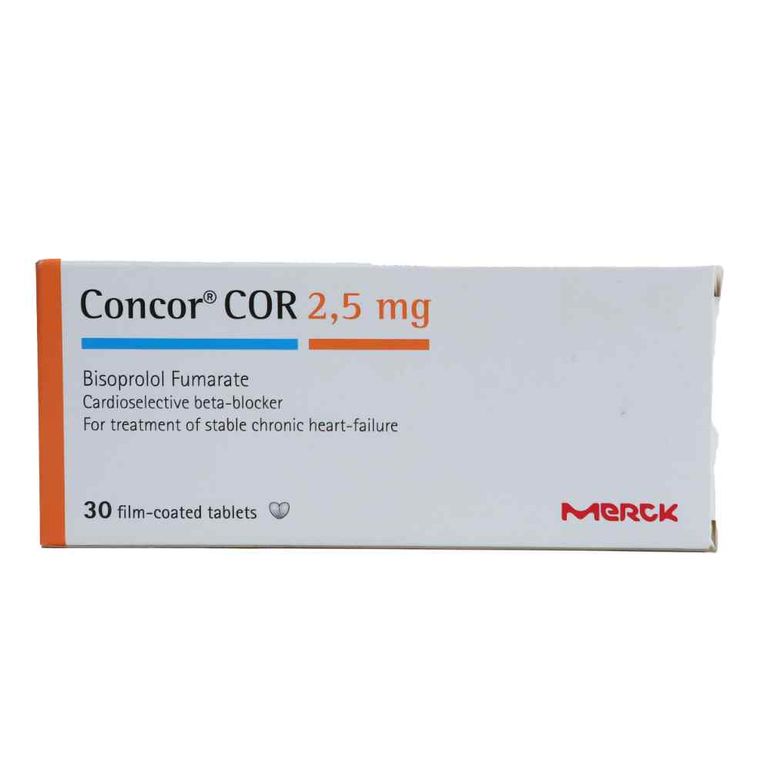
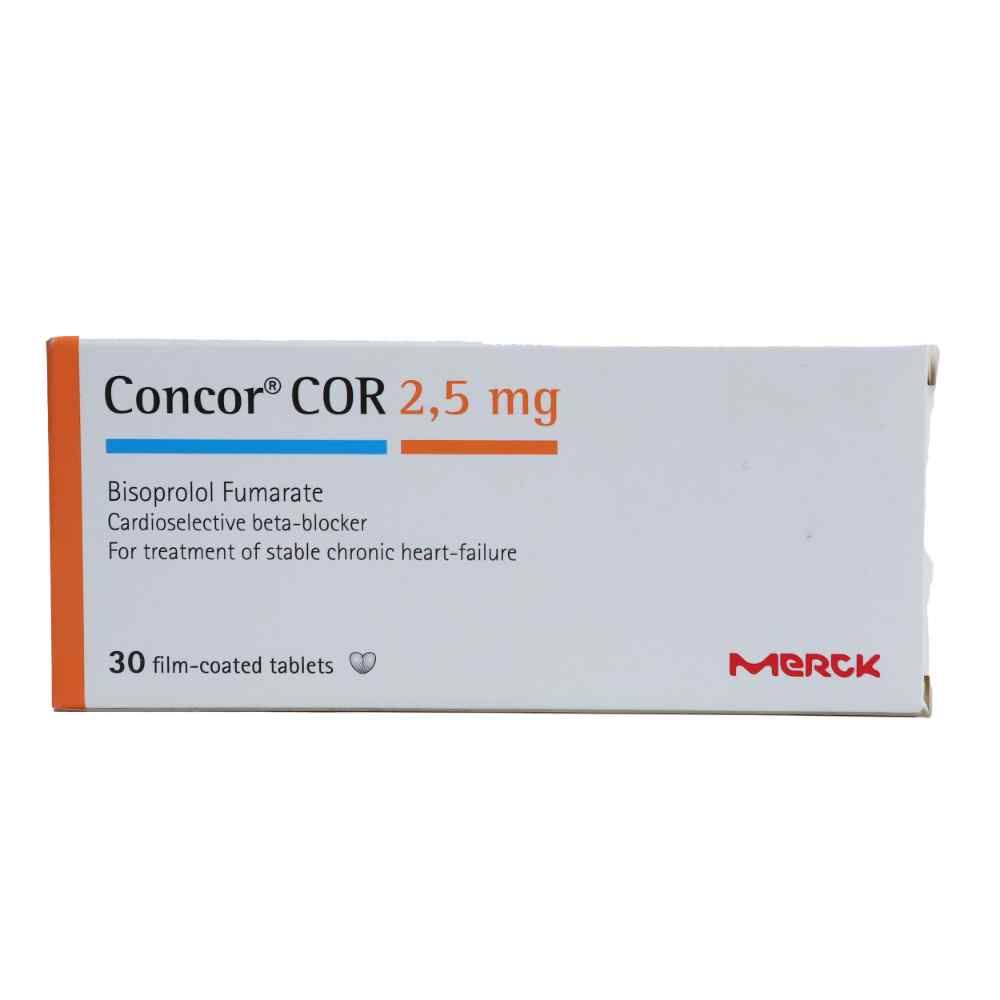
Concor Cor 2.5 mg is a highly selective beta-1 adrenergic receptor blocker (beta-blocker) containing bisoprolol fumarate as its active pharmaceutical ingredient. It is a prescription medication primarily indicated for the treatment of stable chronic heart failure with reduced systolic left ventricular function, management of essential hypertension (high blood pressure), and control of angina pectoris.
By inhibiting sympathetic stimulation to the heart, Concor Cor 2.5 mg decreases heart rate, reduces myocardial oxygen demand, and lowers systemic blood pressure, thereby stabilizing cardiovascular hemodynamics and reducing overall workload on the heart.
Active Ingredient & Mechanism of Action
Active Ingredient
Bisoprolol Fumarate (2.5 mg per film-coated tablet): A synthetic, highly cardioselective beta-1 adrenoreceptor antagonist without intrinsic sympathomimetic activity (ISA) or clinically relevant membrane-stabilizing activity.
Mechanism of Action
Selective Beta-1 Blockade: Bisoprolol binds preferentially to beta-1 adrenergic receptors located predominantly in heart tissue. By blocking the binding of endogenous catecholamines (epinephrine and norepinephrine), it dampens the heart's response to sympathetic nervous system stimulation.
Reduction of Heart Rate & Cardiac Workload: The blockade decreases sinus rate, slows AV node conduction, and reduces myocardial contractility, leading to a decreased resting and exercise heart rate.
Renin Secretion Inhibition: Bisoprolol suppresses the release of renin from the renal juxtaglomerular apparatus, downregulating the renin-angiotensin-aldosterone system (RAAS) and contributing to sustained blood pressure reduction.
Key Medical Indications & Clinical Benefits
Management of Chronic Heart Failure: Used as part of standard medical therapy alongside ACE inhibitors, diuretics, or angiotensin receptor blockers to improve survival rates, reduce hospitalizations, and slow disease progression in patients with stable chronic heart failure.
Hypertension Control: Effectively reduces systolic and diastolic blood pressure levels in patients with mild to moderate essential hypertension.
Cardioprotective Function: Reduces myocardial oxygen demand, helping relieve symptoms of exercise-induced angina and protecting vulnerable cardiac tissue from excessive adrenergic stimulation.
High Cardioselectivity Profile: Its pronounced selectivity for beta-1 receptors minimizes side effects associated with beta-2 blockade, such as bronchospasm in peripheral airways or metabolic disruption in glucose control, enhancing overall clinical tolerance compared to non-selective beta-blockers.
Usage Instructions & Dosage Protocol
Caution: Concor Cor 2.5 mg is a prescription-only drug. Dosage adjustments, particularly during treatment initiation for heart failure, must strictly adhere to a physician-monitored titration schedule.
Administration: Tablets should be taken orally once daily in the morning. Swallow the tablet whole with water; it may be taken with or without food.
Heart Failure Titration Protocol: Treatment of stable chronic heart failure requires a gradual dose-titration phase, typically starting at 1.25 mg once daily and stepping up incrementally (e.g., to 2.5 mg, 3.75 mg, up to a maximum tolerated dose of 10 mg once daily) at bi-weekly intervals under close clinical supervision.
Missed Dose: If a dose is missed, take it as soon as remembered on the same day. If forgotten until the next day, skip the missed dose and resume the standard schedule. Never double the dose to compensate for a missed tablet.
Discontinuation Warning: Treatment with bisoprolol must not be stopped abruptly. Abrupt withdrawal can precipitate rebound hypertension, worsen ischemic heart disease, or trigger acute myocardial infarction. Dose reduction should always be executed gradually over 1 to 2 weeks under medical advice.
Safety Precautions, Warnings & Contraindications
Absolute Contraindications
Acute Heart Failure or Decompensation: Not indicated during acute heart failure episodes or episodes of heart failure decompensation requiring intravenous inotropic therapy.
Cardiogenic Shock: Contraindicated in states of severe cardiovascular collapse.
Severe Bradycardia & AV Block: Contraindicated in patients with sinus bradycardia (resting heart rate under 50–60 beats per minute prior to treatment), second- or third-degree AV block (without a functioning pacemaker), or sick sinus syndrome.
Severe Bronchospastic Disease: Severe asthma or end-stage chronic obstructive pulmonary disease (COPD).
Severe Peripheral Arterial Disease: Severe forms of Raynaud’s syndrome or advanced peripheral arterial occlusive disease.
Precautions & Drug Interactions
Diabetes Mellitus: Bisoprolol may mask key warning symptoms of hypoglycemia, particularly tachycardia (rapid heart rate). Regular blood glucose monitoring is recommended.
Renal and Hepatic Impairment: Dose adjustments and monitoring are required in patients with severe kidney or liver impairment.
Concomitant Medications: Co-administration with calcium channel blockers (e.g., diltiazem, verapamil), antiarrhythmics (e.g., amiodarone), or centrally acting antihypertensives requires careful clinical oversight to prevent severe bradycardia or cardiac conduction blockade.
Product Specifications & Storage
Dosage Form: Heart-shaped, film-coated tablets with a break-mark.
Packaging: Blister packs packaged in protective cardboard boxes (commonly 30 tablets per box).
Storage Requirements: Store below 30°C (86°F) in a dry place, protected from direct sunlight and light exposure. Keep out of reach of children.





 Medication