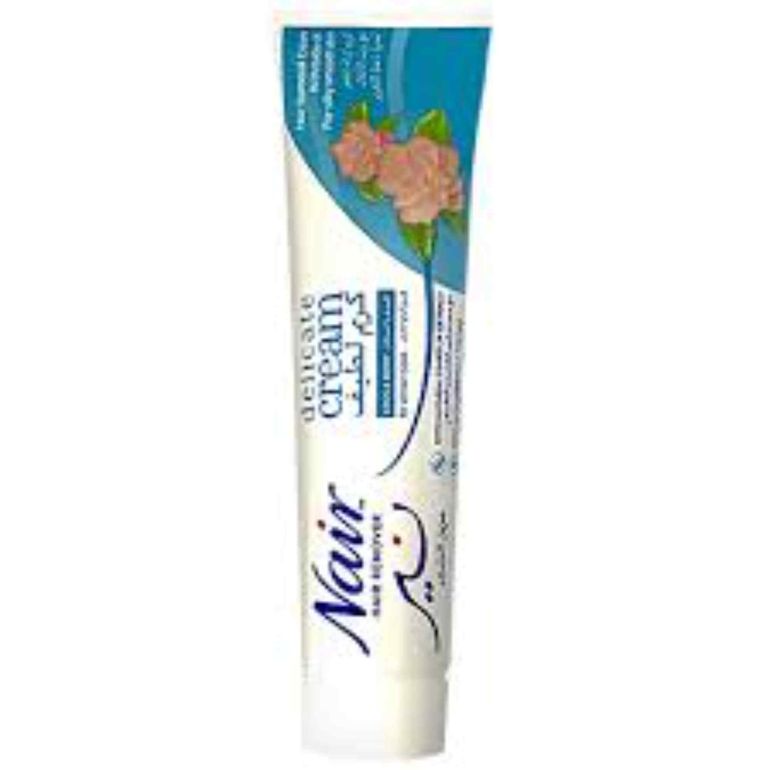
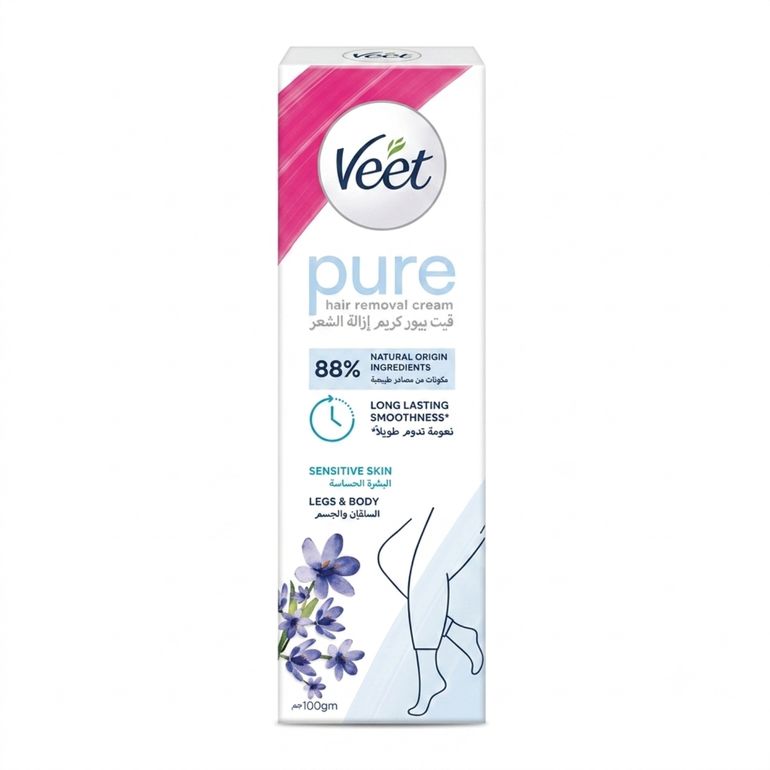
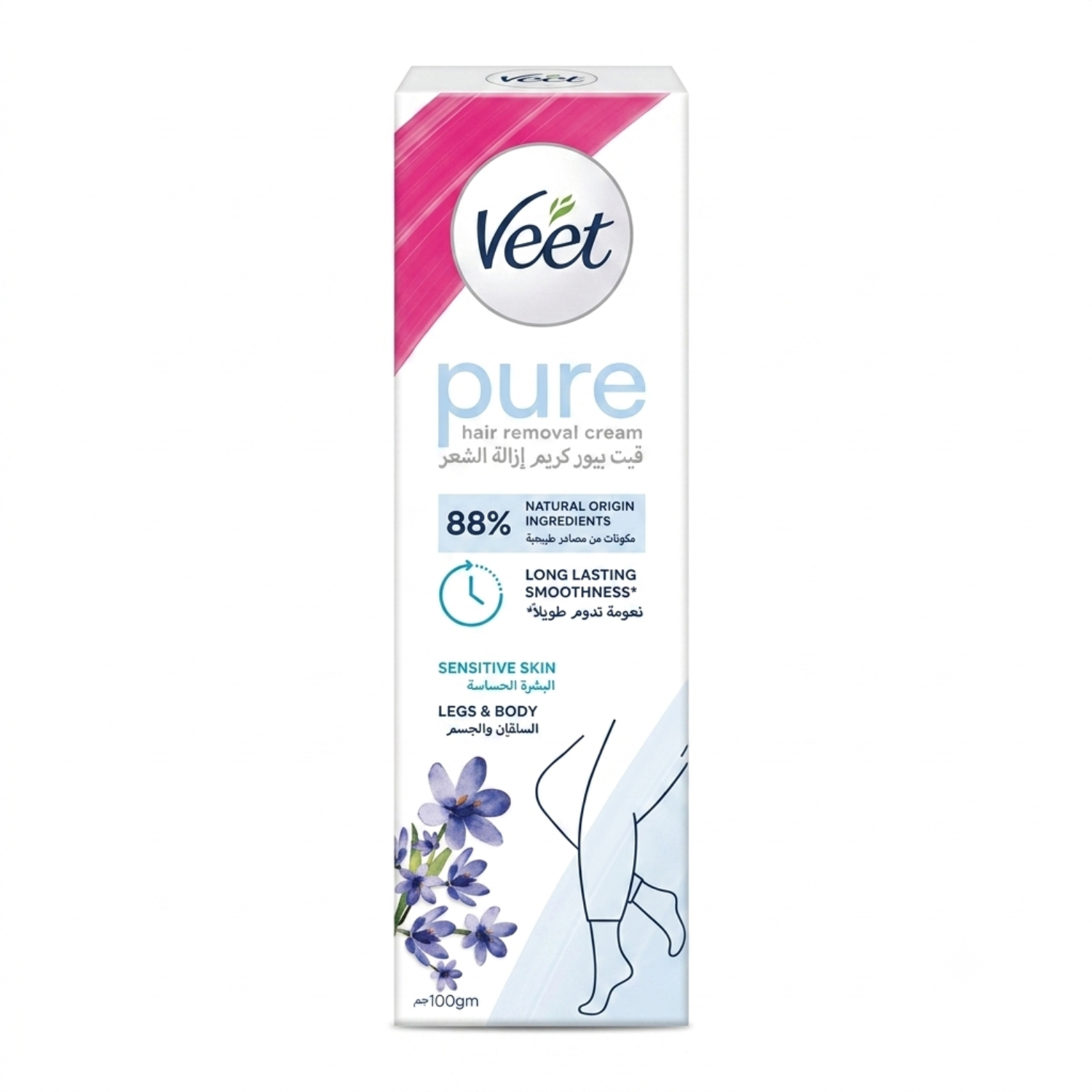
Veet Hair Removal Cream for Sensitive Skin is a topical chemical depilatory agent formulated to facilitate the removal of unwanted body hair through the chemical degradation of the hair shaft. Designed specifically for individuals with reactive or sensitive dermal tissues, this formulation incorporates emollient and soothing agents to mitigate potential localized irritation during the hair removal process. The product acts upon the hair proteins at the epidermal surface, allowing for non-invasive removal without the mechanical trauma often associated with shaving or epilation.
Key Medical Benefits and Functional Value
1. Non-Mechanical Hair Removal
Unlike shaving, which utilizes a sharp blade that can cause follicular micro-trauma, epidermal nicks, and subsequent ingrown hairs (pseudofolliculitis barbae), this chemical depilatory dissolves the keratin structure of the hair just below the skin surface. This method minimizes the risk of mechanical skin abrasions.
2. Dermal Protection and Barrier Support
The inclusion of Aloe Vera and Vitamin E (tocopherol) serves a clinical purpose beyond superficial application. These ingredients are included to provide immediate topical soothing, help maintain skin hydration levels, and support the integrity of the stratum corneum (the outermost layer of the skin) post-depilation.
3. Suitable for Sensitive Dermal Profiles
The formulation is adjusted to be appropriate for sensitive skin types. By utilizing a balanced pH profile and skin-calming botanical extracts, it reduces the risk of erythema (redness) and inflammatory responses that can occur with harsher hair removal methods.
Ingredients and Mechanism of Action
Mechanism of Chemical Depilation
The active ingredients in Veet function by breaking the disulfide bonds of the keratin molecules within the hair shaft. By disrupting these protein structures, the hair is sufficiently weakened to be wiped away from the skin's surface.
Key Components:
Thioglycolate Salts: These are the primary depilatory agents responsible for the breakdown of the keratin structure.
Aloe Vera Extract: Employed for its recognized anti-inflammatory and humectant properties, which aid in cooling the skin during and after the application period.
Vitamin E (Tocopherol): A potent antioxidant that aids in protecting the skin from oxidative stress and supporting the recovery of the epidermal barrier following chemical exposure.
Usage Instructions and Safety Precautions
Clinical Administration Guide
For safe and effective application, users should adhere to the following clinical protocol:
Preliminary Patch Test: Prior to full-scale application, apply the cream to a small, inconspicuous area of the skin according to the package instructions. If no adverse reaction (such as intense burning, stinging, or redness) occurs within 24 hours, the product may be used.
Application: Apply a uniform layer of the cream onto the targeted area using the provided spatula, ensuring the hair is completely covered.
Contact Time: The product should remain on the skin for the specific time interval indicated in the instructions (usually between 5 to 10 minutes). Do not exceed the maximum recommended contact time, as this increases the probability of chemical irritation.
Removal: Use the spatula to gently remove the cream and the dissolved hair from a small area. If the hair removes easily, continue clearing the rest of the area. Rinse the skin thoroughly with lukewarm water.
Safety Precautions and Contraindications
Application Restrictions: Do not use on compromised skin, including areas with cuts, abrasions, rashes, sunburn, or varicose veins.
Sensitive Areas: Avoid application on the face, scalp, perianal, or genital areas unless the product is specifically designated for such use.
Adverse Reactions: If at any point during application the user experiences a burning sensation or significant irritation, remove the cream immediately and rinse the area with copious amounts of water.
Storage: Maintain the product in its original packaging, stored in a cool, dry environment away from direct sunlight and temperature extremes.





 Brands