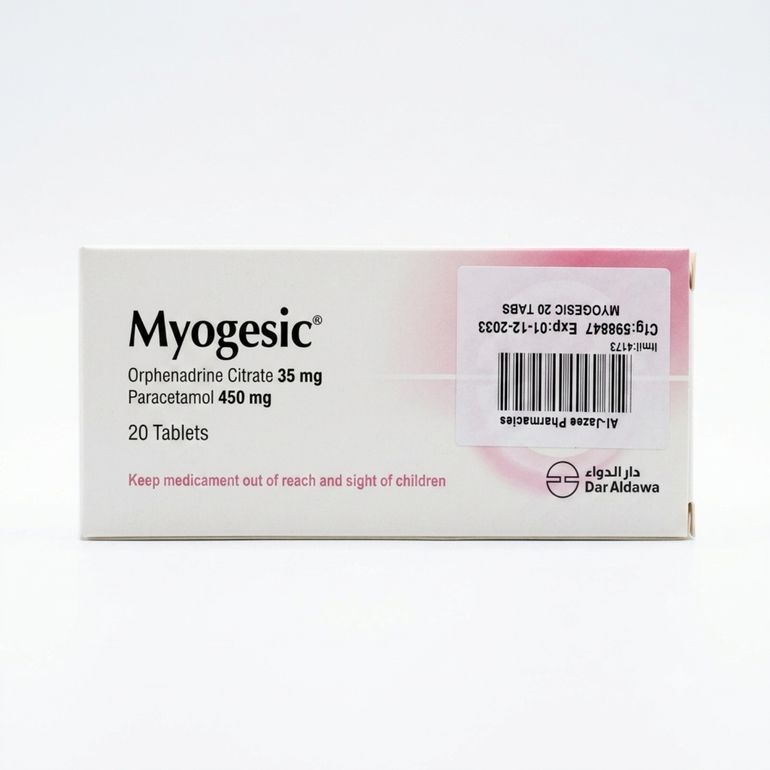
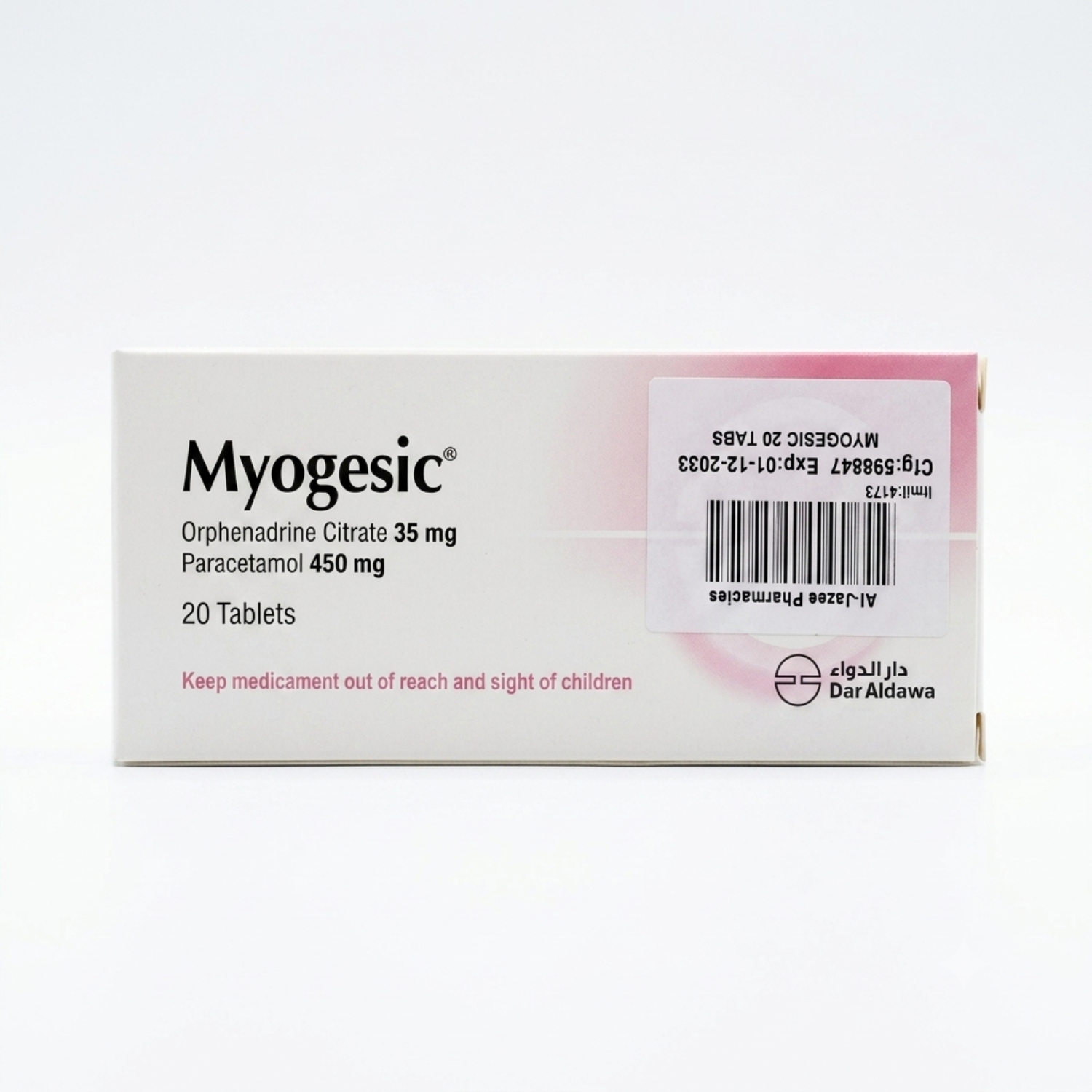
Myogesic is a combined pharmacological formulation indicated for the symptomatic relief of acute, painful musculoskeletal conditions. Each tablet contains a synergistic combination of Orphenadrine Citrate, a skeletal muscle relaxant, and Paracetamol (Acetaminophen), a non-opioid analgesic and antipyretic. This combination is clinically utilized to address the dual nature of musculoskeletal discomfort, targeting both the physiological source of muscular contraction and the associated pain signaling pathways.
Key Medical Benefits & Clinical Value
1. Dual-Action Therapeutic Effect
Myogesic provides a twofold approach to patient recovery:
Skeletal Muscle Relaxation: Orphenadrine Citrate acts centrally in the brain to interrupt the nerve impulses that are sent to the brain and interpreted as pain. By altering these signals, it effectively reduces involuntary muscle spasms and stiffness.
Analgesic Efficacy: Paracetamol provides systemic relief from pain by inhibiting the synthesis of prostaglandins in the central nervous system, effectively raising the patient’s pain threshold.
2. Management of Musculoskeletal Disorders
The combination is indicated for the adjunctive treatment of conditions that involve severe muscle spasms, including:
Acute low back pain (lumbago).
Muscle strains and sprains resulting from physical activity.
Fibrositis and torticollis (wry neck).
Tension-related muscular discomfort.
Ingredients & Mechanism of Action
Formulation Composition
Orphenadrine Citrate: A centrally acting muscle relaxant that provides indirect analgesic effects by reducing muscle spasm.
Paracetamol: A well-established analgesic agent that provides pain relief without the gastrointestinal irritation commonly associated with non-steroidal anti-inflammatory drugs (NSAIDs).
Mechanism of Action
Central Nervous System Modulation: Orphenadrine acts on the spinal cord and supraspinal sites to dampen the motor neuron activity responsible for maintaining hypertonic muscle states.
Prostaglandin Inhibition: Paracetamol works by elevating the pain threshold and inhibiting the production of prostaglandins—chemicals that transmit pain signals and induce inflammatory responses—within the brain.
Usage Instructions & Safety Precautions
Clinical Administration Guidelines
Dosage: The standard adult dosage typically involves one to two tablets, administered orally three times daily, or as directed by a healthcare professional.
Administration: Tablets should be swallowed whole with a sufficient amount of water. They may be taken with or without food; however, taking the medication with food may minimize the potential for gastric upset.
Safety Precautions and Warnings
Contraindications: This medication is contraindicated in patients with a known hypersensitivity to orphenadrine or paracetamol, or those suffering from glaucoma, pyloric or duodenal obstruction, achalasia, prostatic hypertrophy, or bladder neck obstruction.
Hepatic Monitoring: Due to the paracetamol content, patients must adhere strictly to the recommended daily dosage to avoid the risk of severe hepatotoxicity. Avoid the concurrent use of other products containing paracetamol.
CNS Effects: Orphenadrine may cause drowsiness or dizziness. Patients should exercise caution when operating heavy machinery or driving until the effects of the medication are known.
Alcohol Interaction: Consumption of alcohol should be avoided during treatment with Myogesic, as it may potentiate the central nervous system depressant effects of the muscle relaxant.
Medical Supervision: If symptoms persist beyond a few days or worsen, patients must consult a physician to evaluate the underlying etiology of the musculoskeletal pain.





 Brands