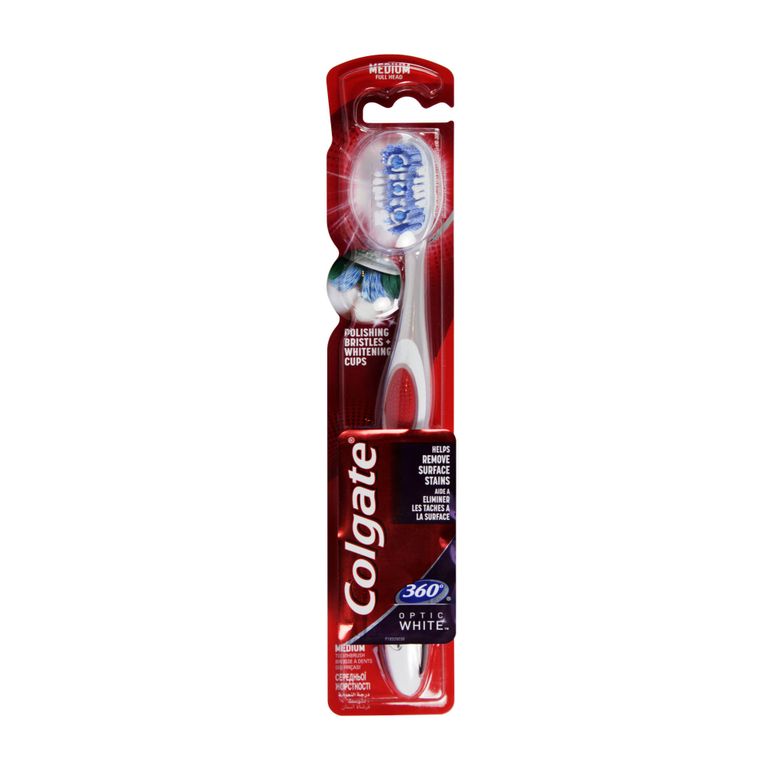
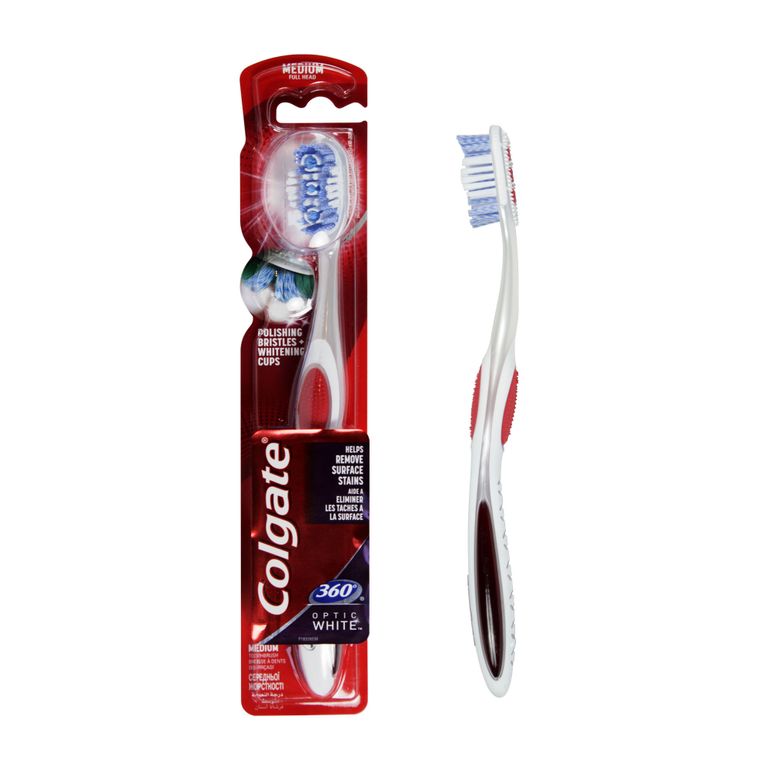
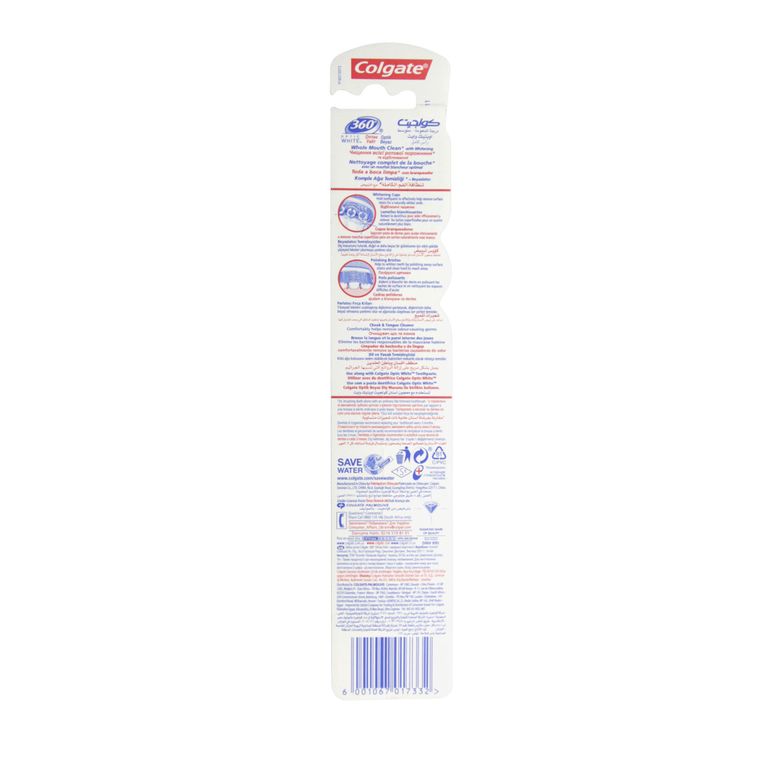
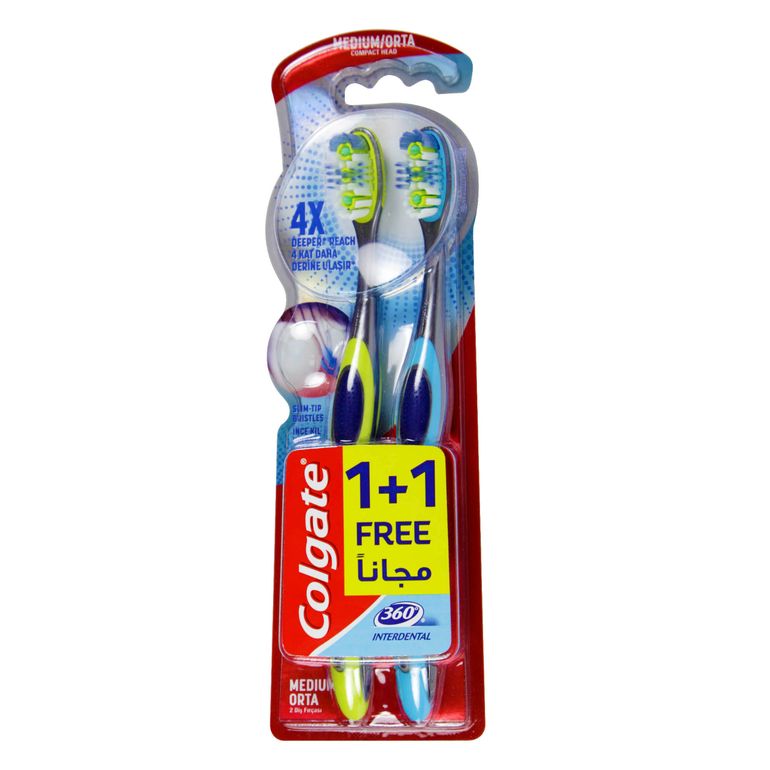
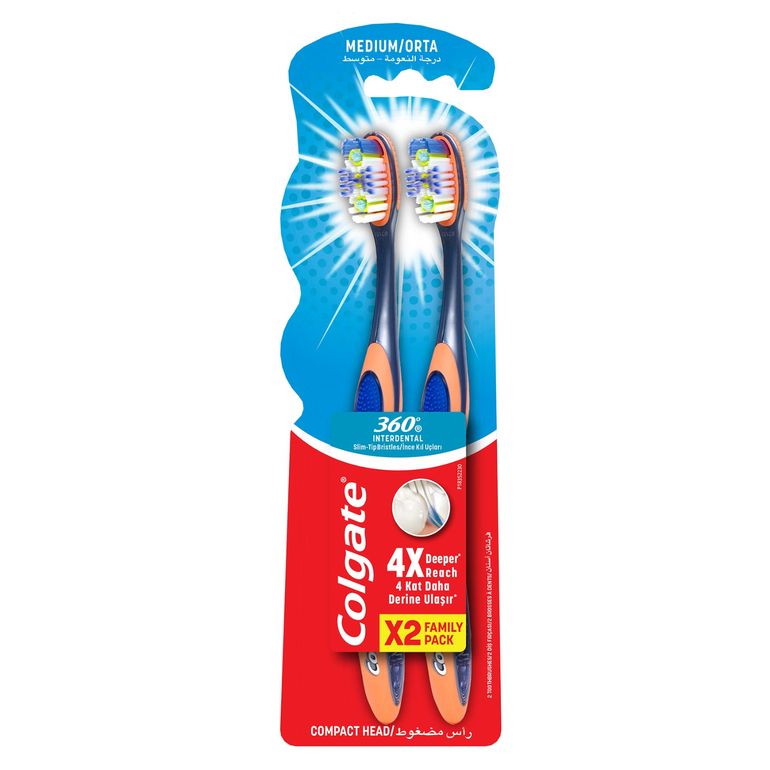
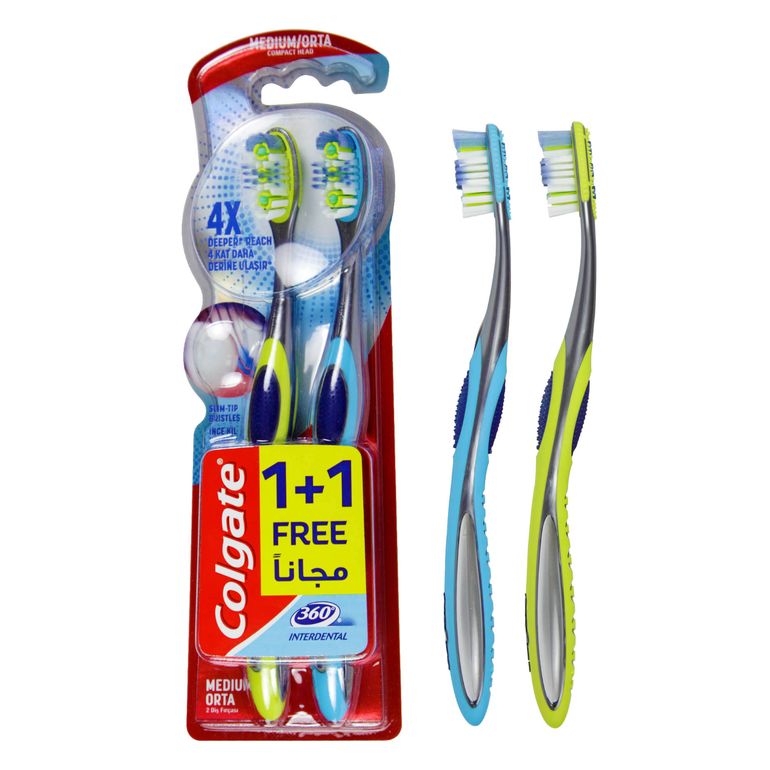
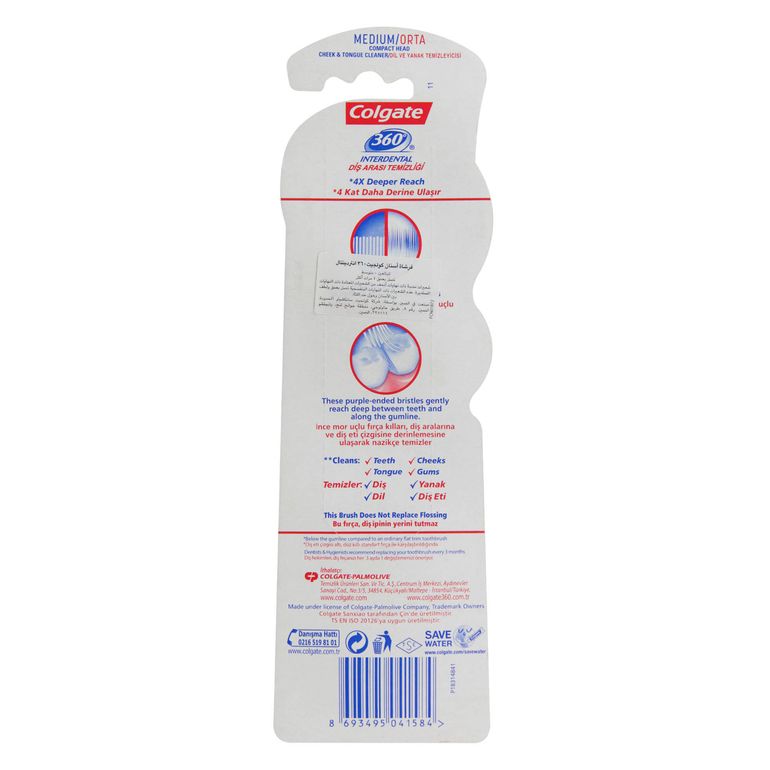
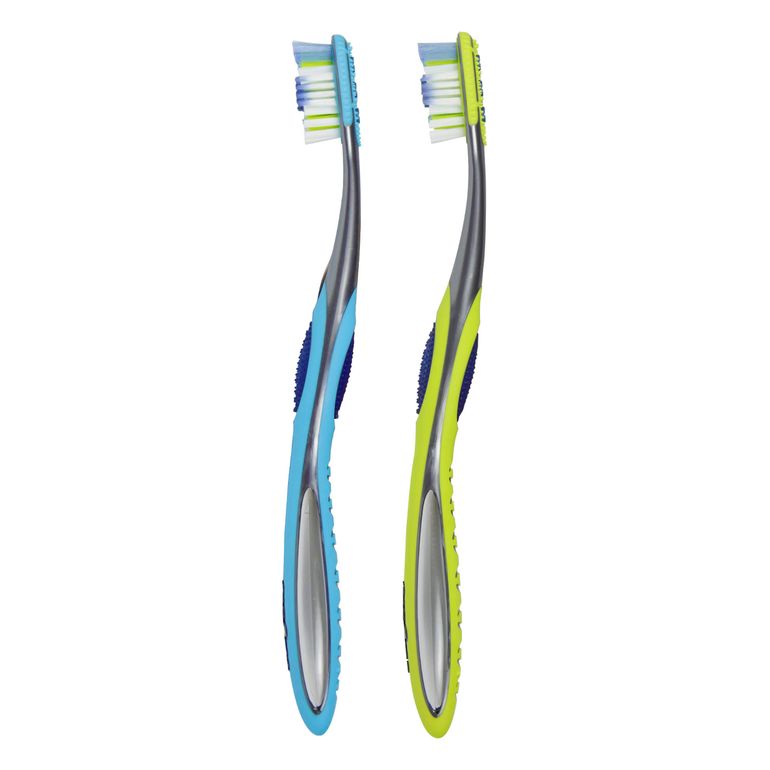
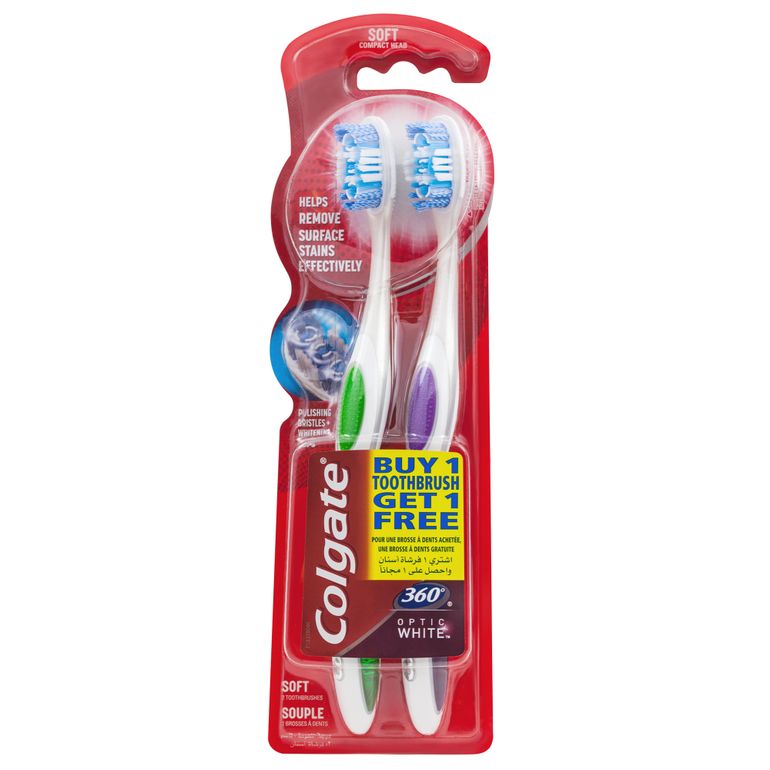
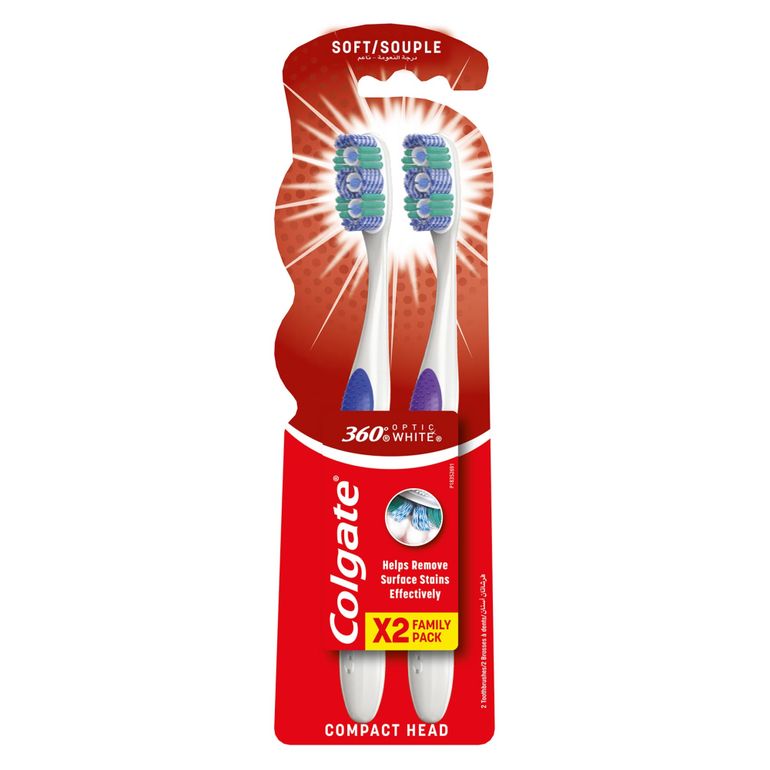
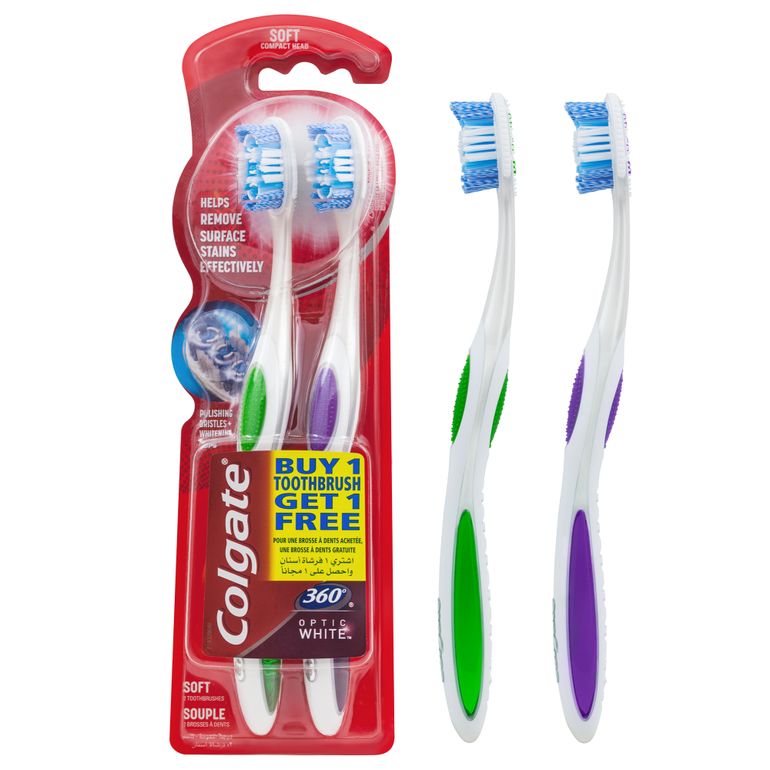
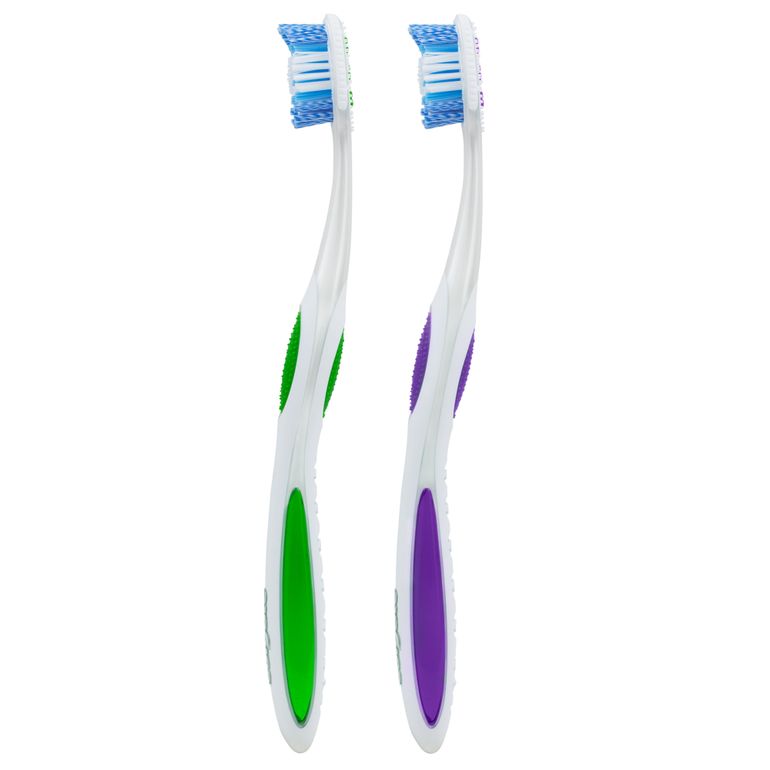
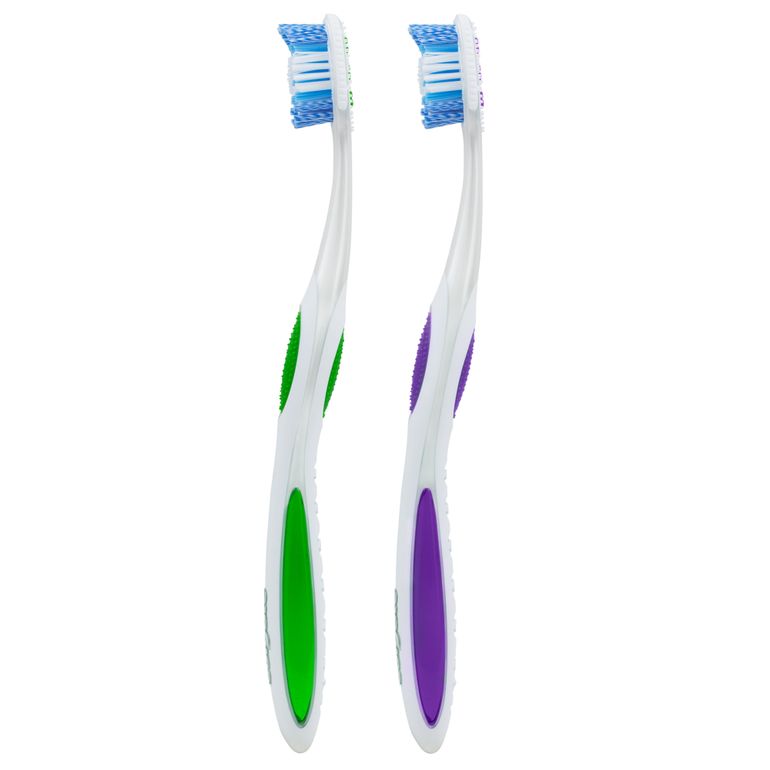
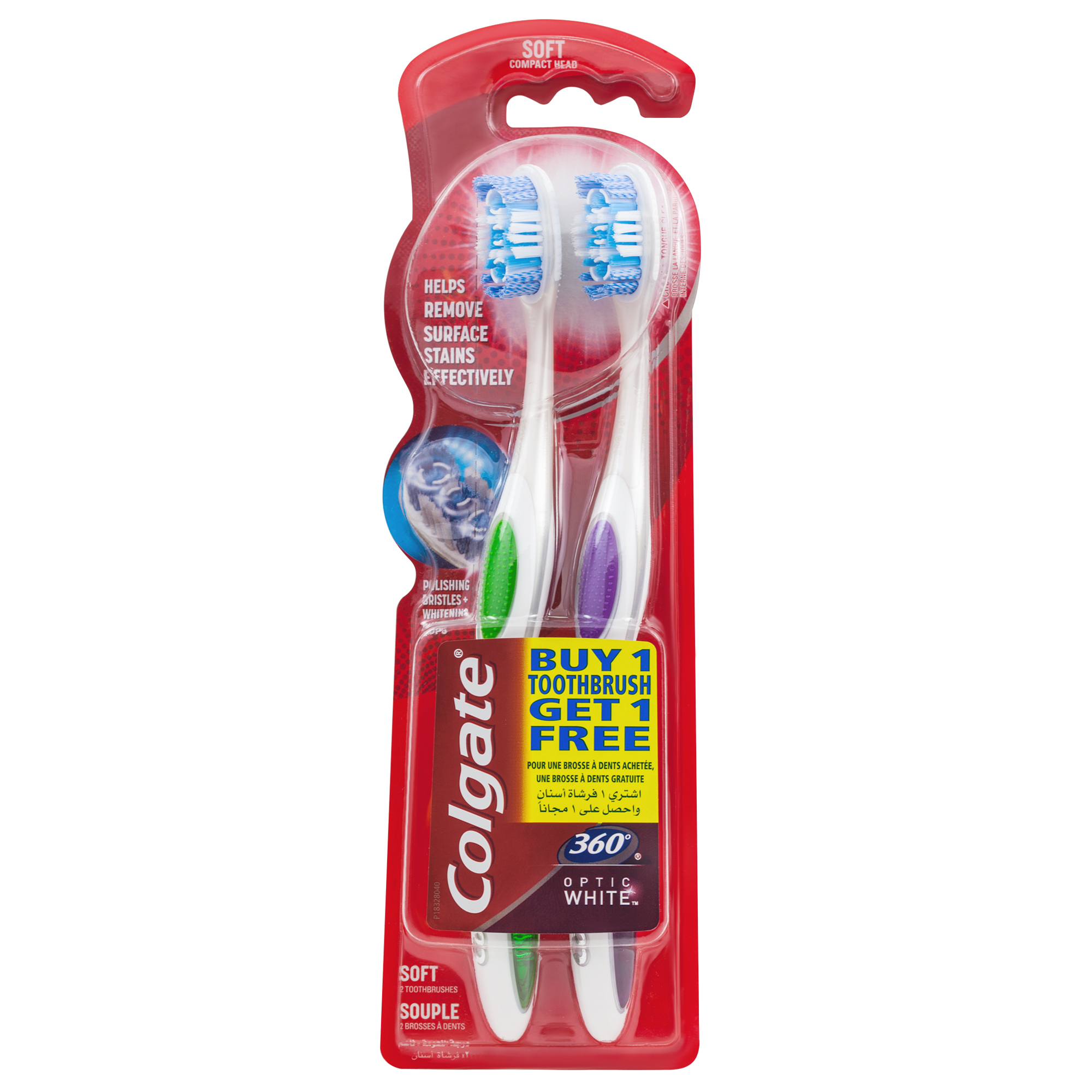
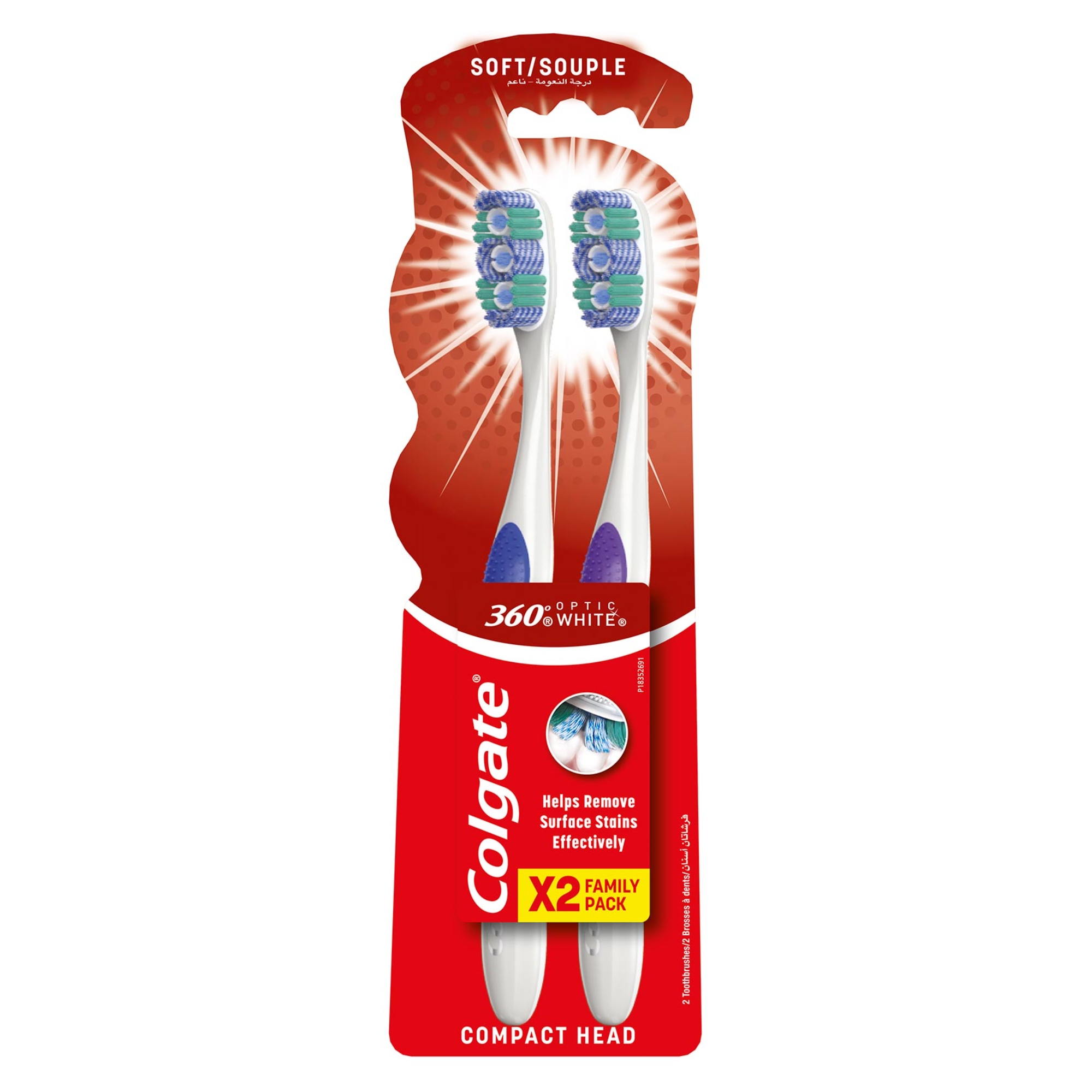
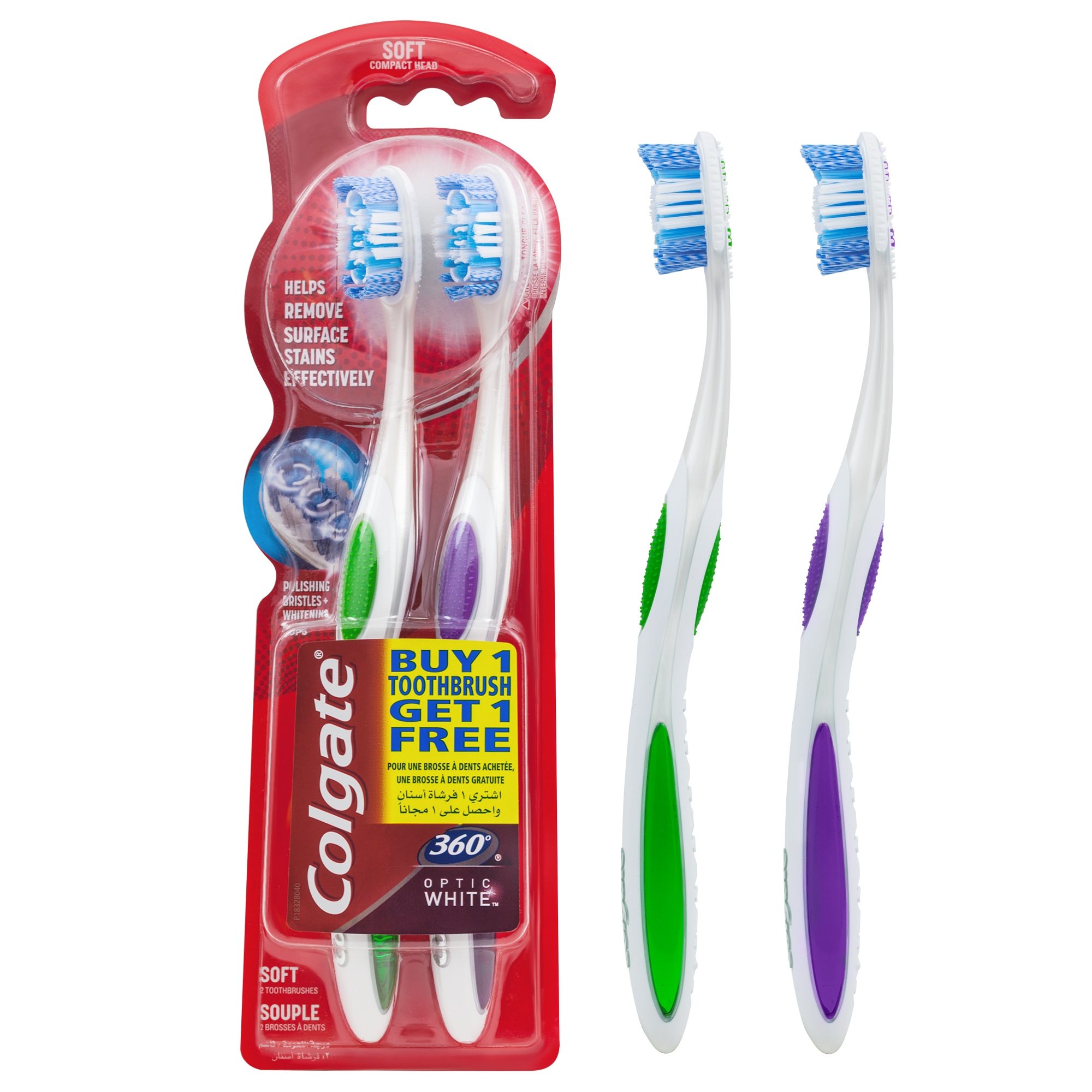
Colgate 360 Optic White Soft is an advanced manual oral hygiene instrument designed to facilitate mechanical plaque removal, extrinsically stain reduction, and comprehensive oral tissue sanitization. Incorporating a multi-functional head architecture, this toothbrush provides targeted mechanical action across tooth surfaces, interdental spaces, and intraoral soft tissues.
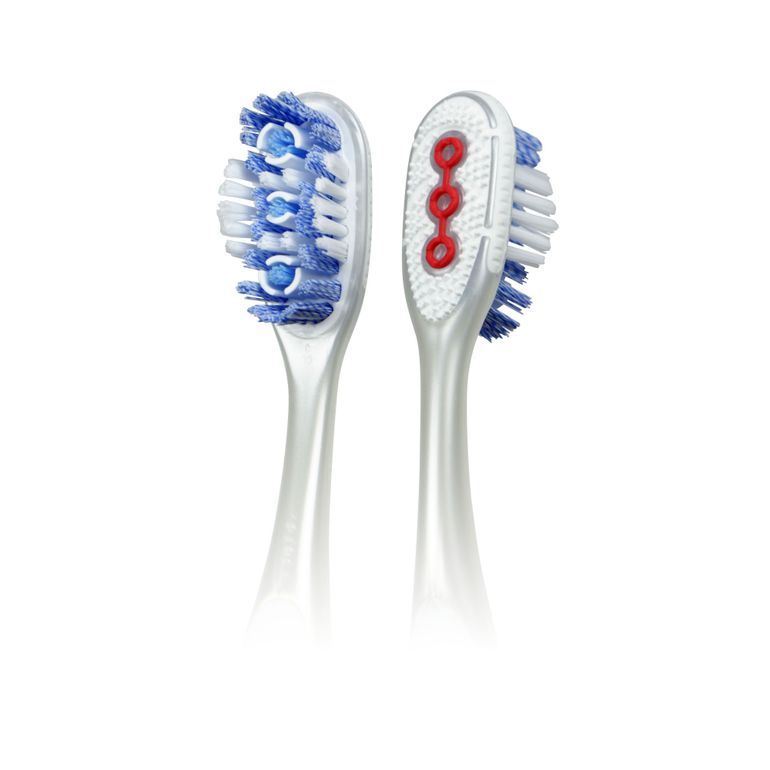
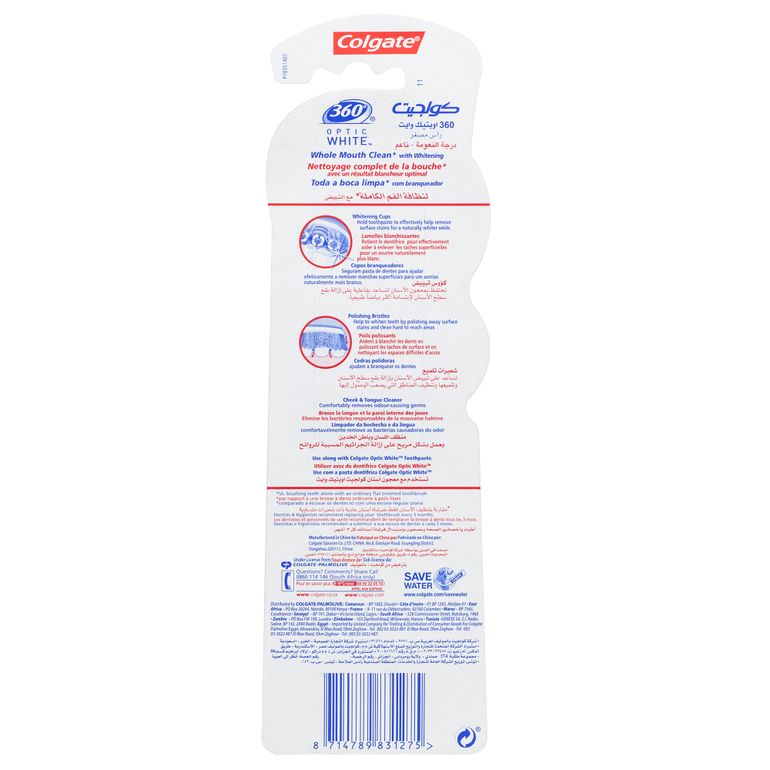
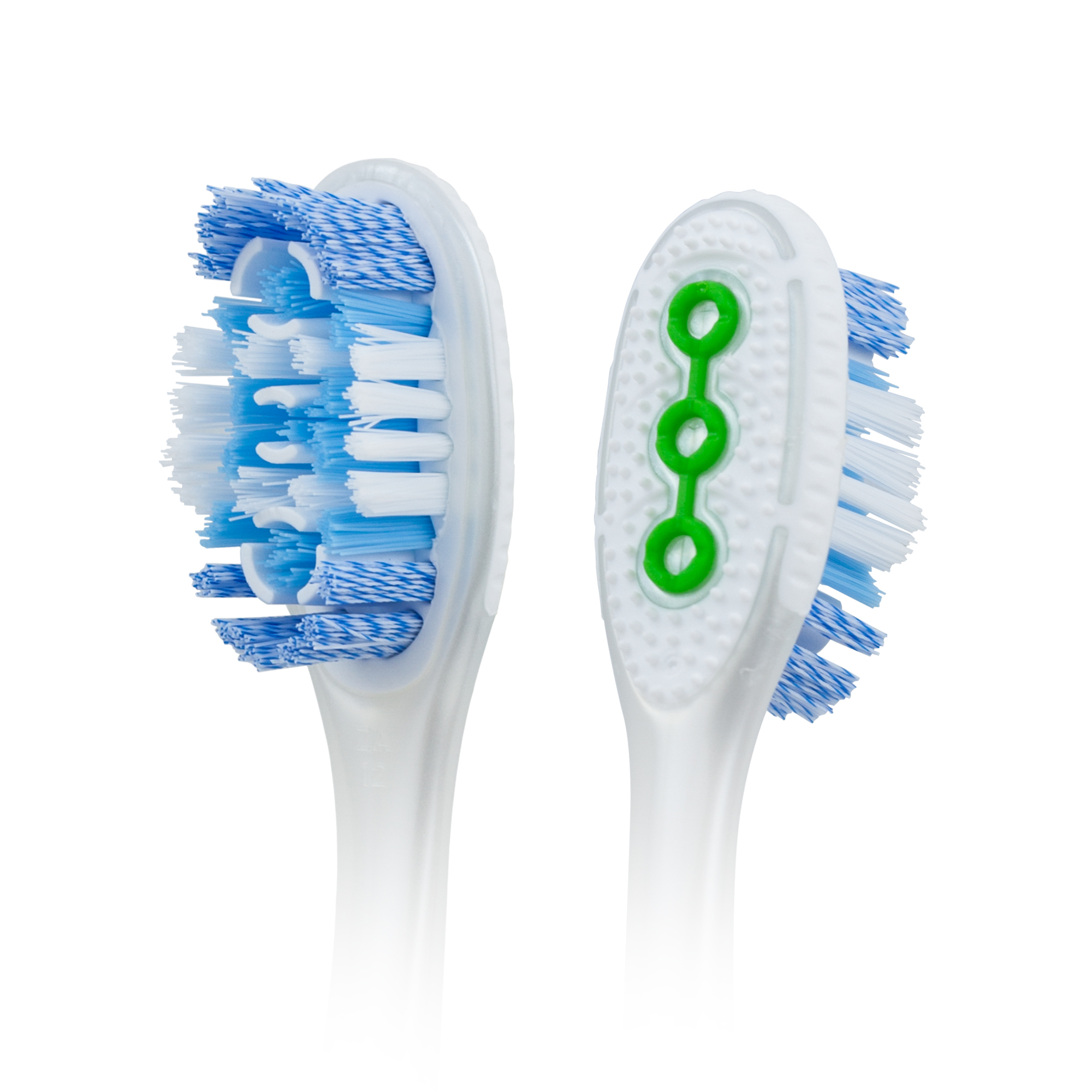
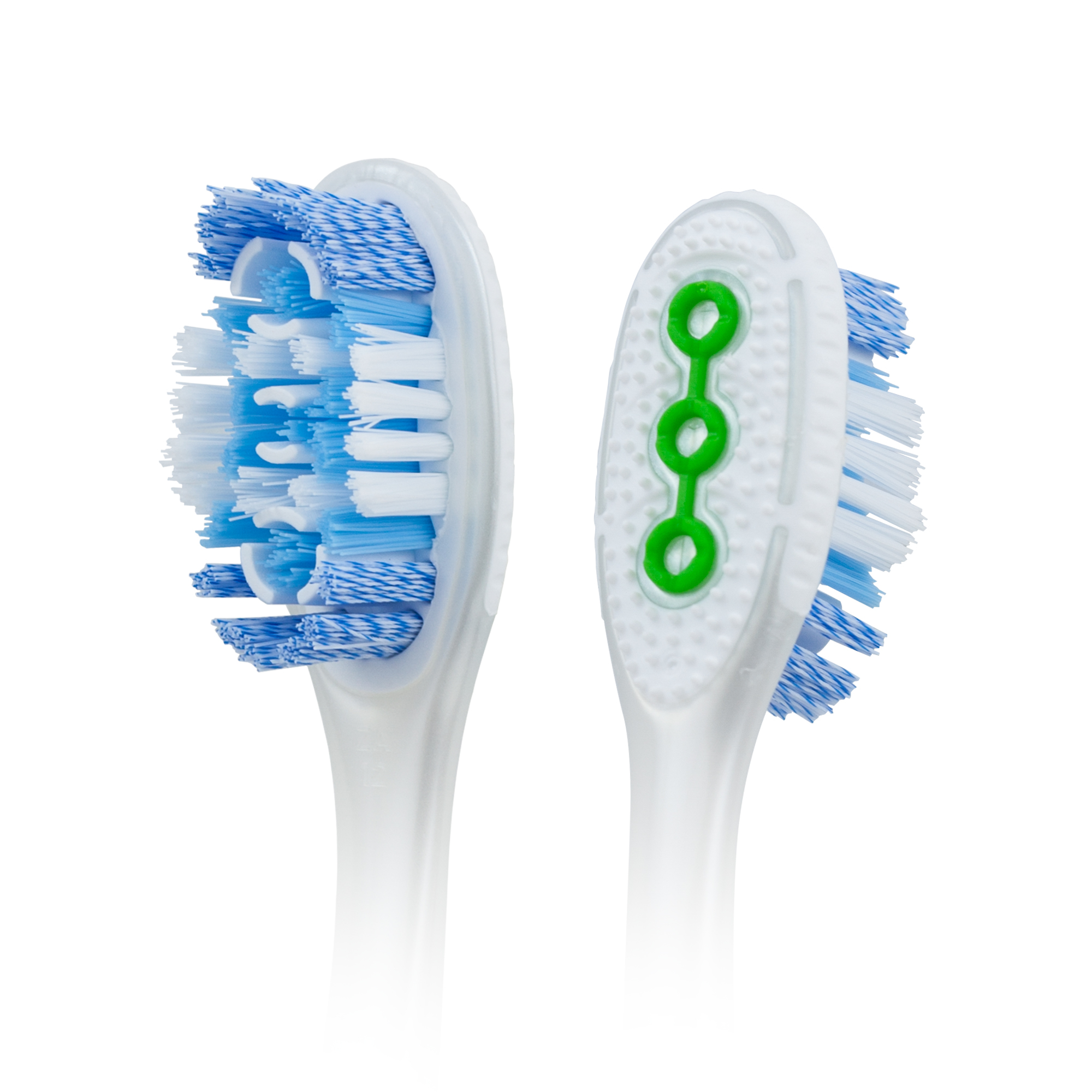
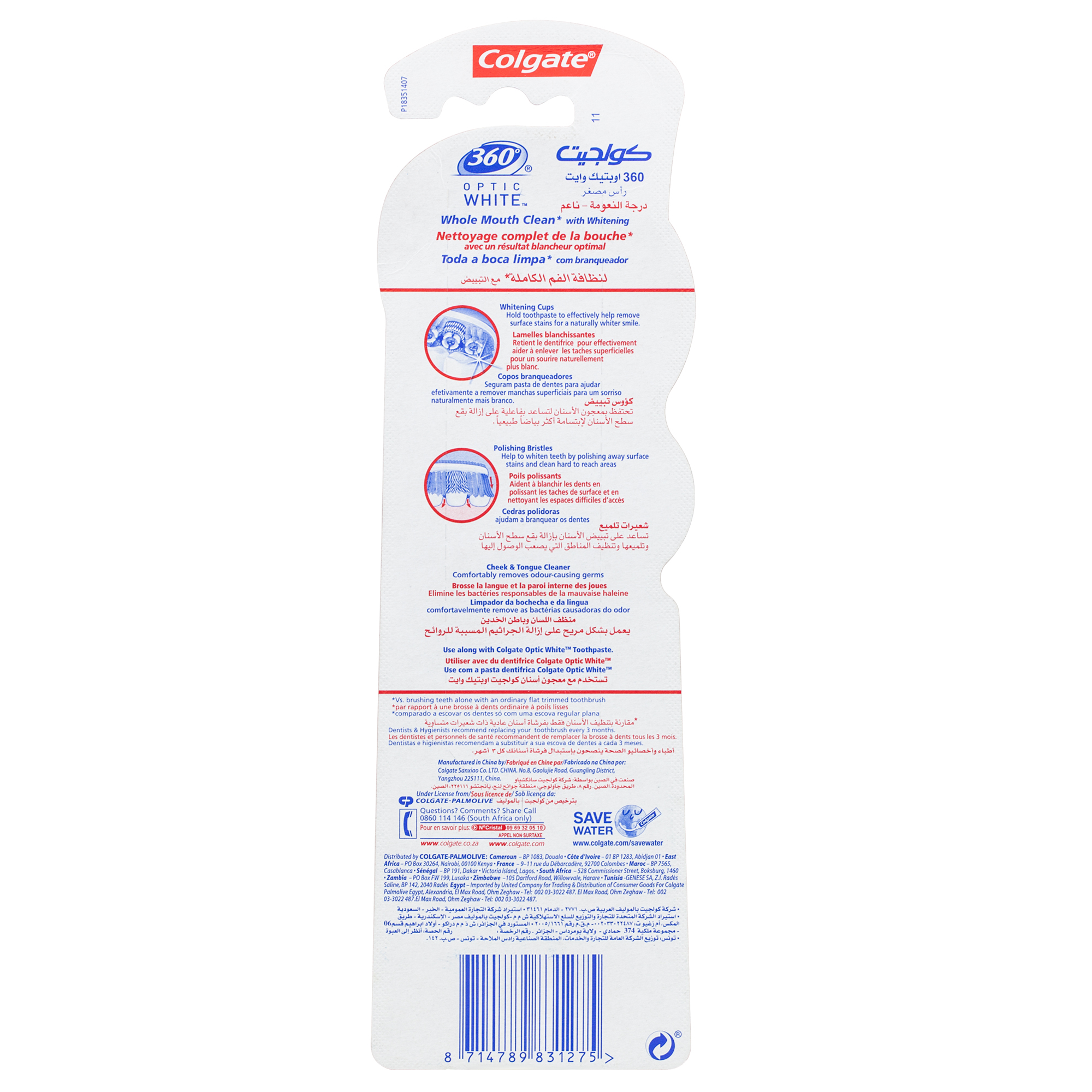
Unlike standard manual toothbrushes restricted to flat-profile bristle fields, the Colgate 360 Optic White system incorporates specialized elastomer whitening cups alongside dual-action spiral polishing bristles. This structural configuration is engineered to remove superficial chromogens—such as those derived from coffee, tea, and dietary tannins—while maintaining low abrasivity to preserve enamel integrity and gingival margins.
Key Medical Benefits & Preventive Value
Mechanical Extrinsic Stain Elimination: The integrated whitening cups physically hold toothpaste against the tooth surface, optimizing micro-polishing efficiency to remove surface discolorations without chemical harshness.
Targeted Interdental & Subgingival Cleaning: Spiral polishing bristles feature multi-angle trim patterns designed to penetrate approximal spaces, dislodging dental biofilm in areas prone to interproximal caries development.
Comprehensive Intraoral Microbial Control: The reverse-side textured elastomer cleaner addresses mucosal bacterial reservoirs on the tongue and inner cheeks, significantly reducing volatile sulfur compounds (VSCs) responsible for oral malodor (halitosis).
Gingival Trauma Prevention: Soft end-rounded nylon filaments minimize micro-abrasions to free gingiva and sulcular epithelium, making the brush suitable for individuals with localized gingival sensitivity or minor tissue inflammation.
Technical Architecture & Structural Mechanism
The mechanical efficiency of the Colgate 360 Optic White Soft toothbrush relies on a multi-component head design crafted from biocompatible, non-toxic polymers:
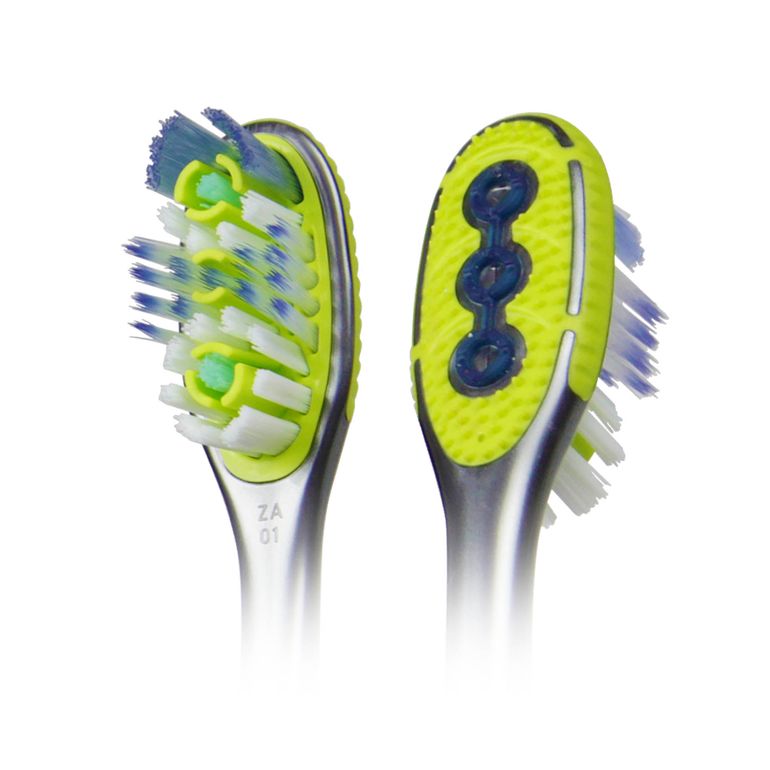
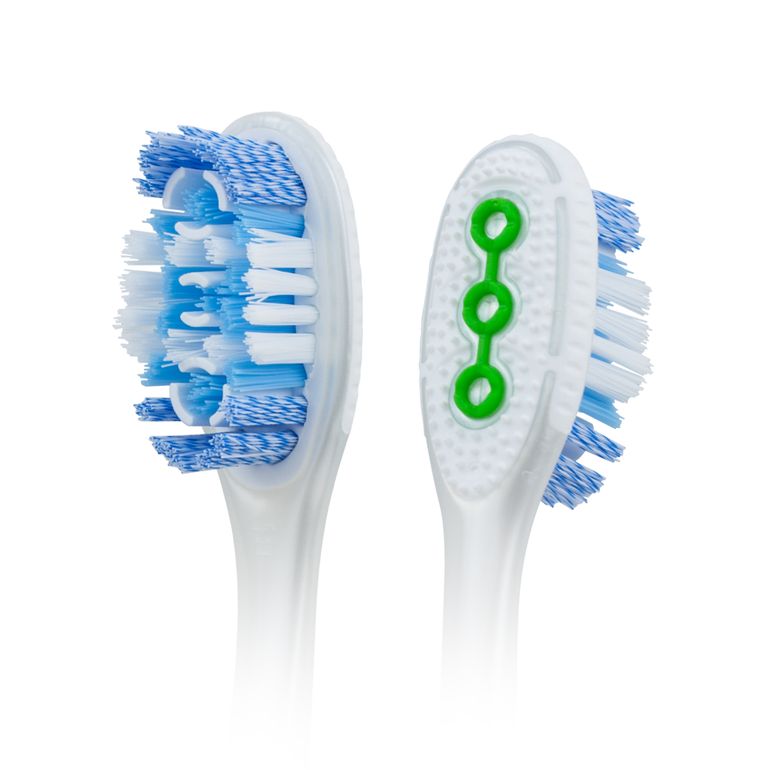
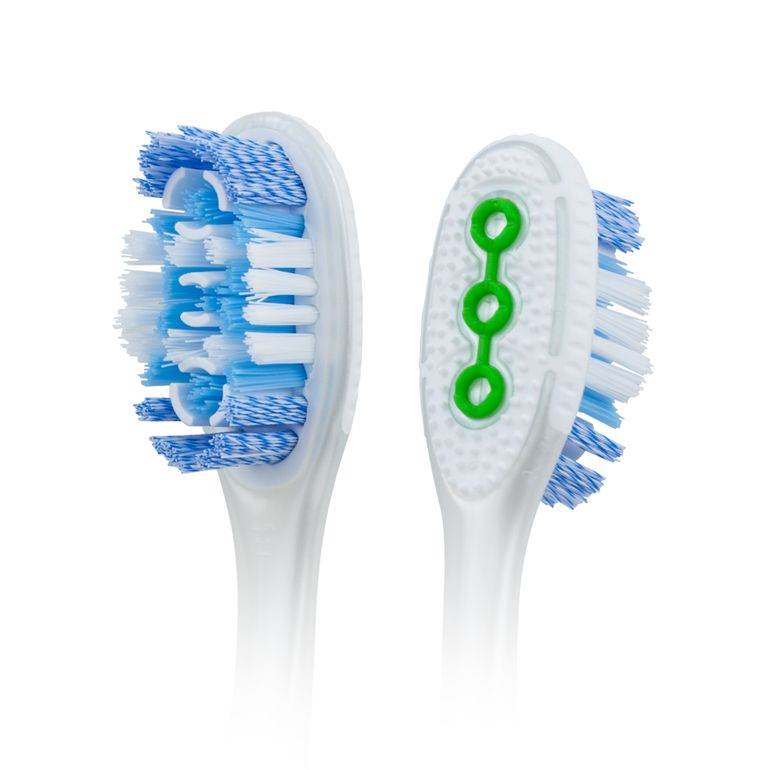
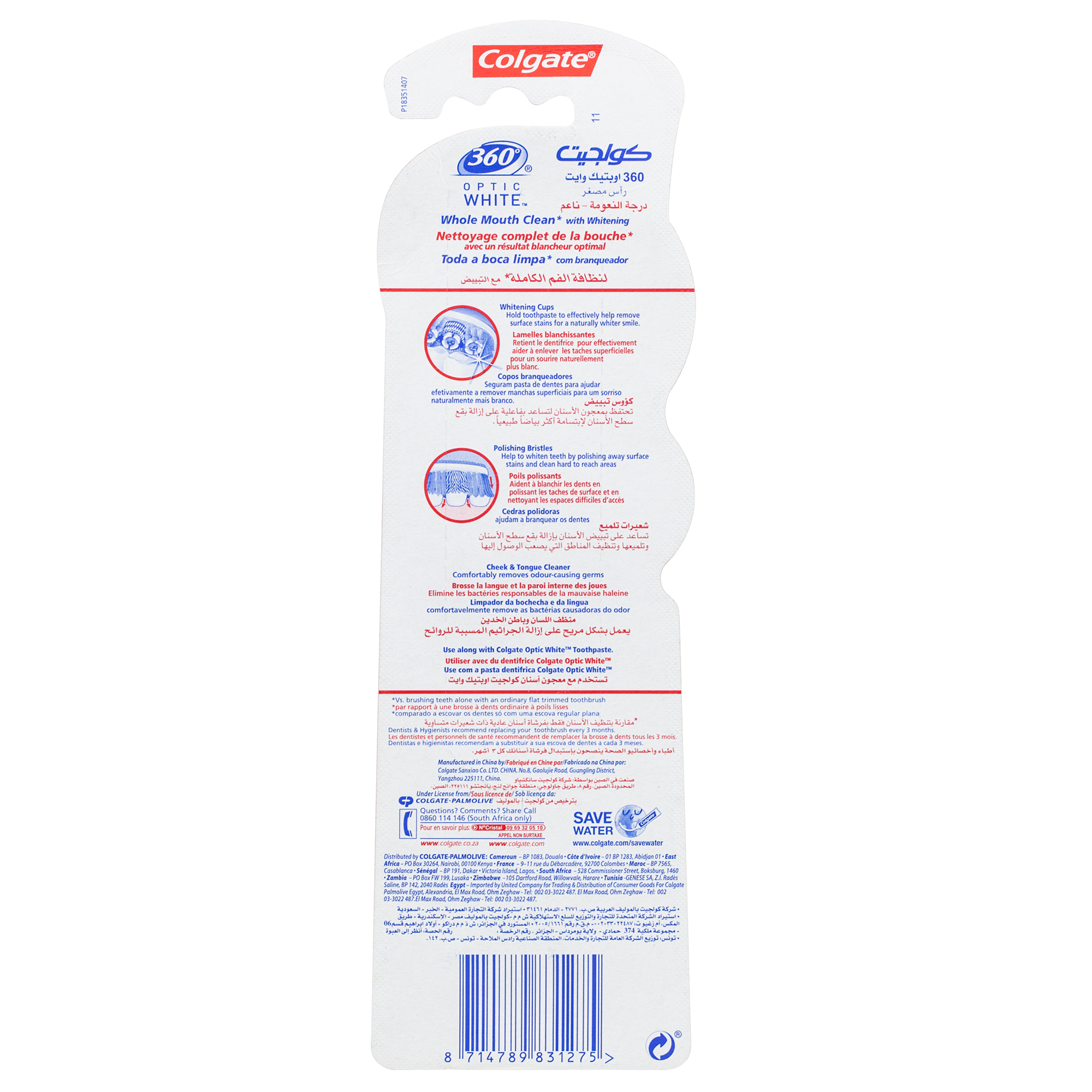
Soft Elastomer Whitening Cups: Positioned centrally within the bristle field, these flexible rubber cups contour to enamel topography. As hydraulic pressure is applied during brushing, the cups trap dentifrice slurry, maximizing surface contact time and boosting mechanical stain removal.
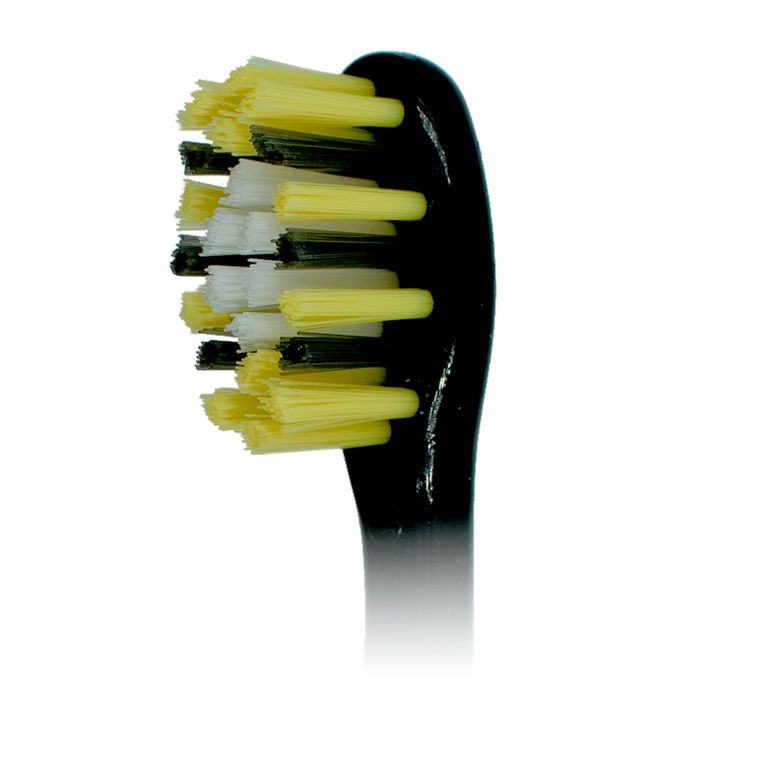
Spiral Polishing Bristles: Surrounding the central cups, these high-density nylon filaments feature a twisted structural profile. The spiral edges enhance friction against enamel surfaces during back-and-forth strokes, assisting in the disruption of adherent dental plaque (biofilm).
Textured Cheek & Tongue Scraper: Located on the posterior surface of the brush head, soft rubber ridges and micro-cleats manually lift debris and desquamated epithelial cells from the lingual dorsum and buccal mucosa.
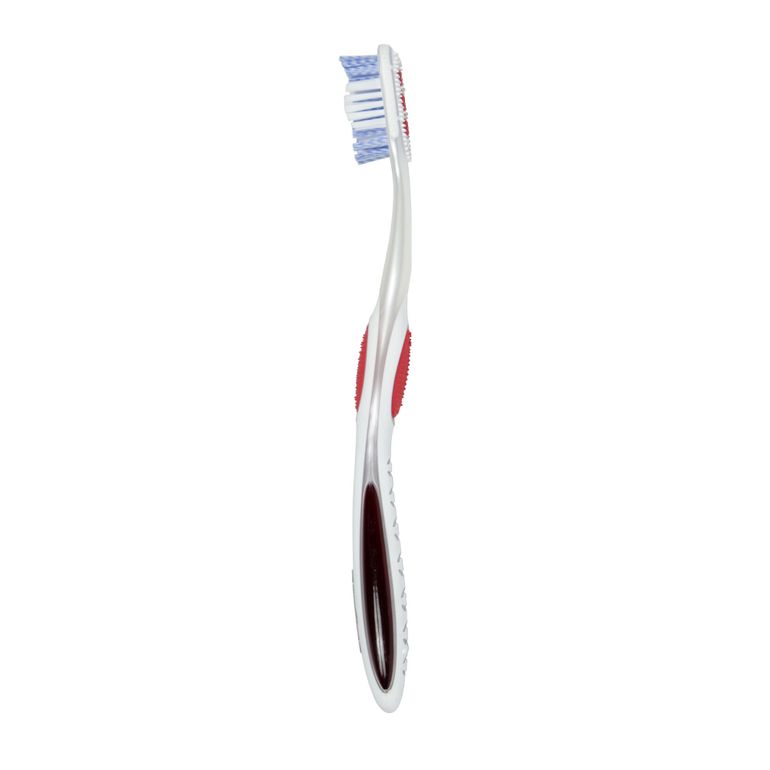
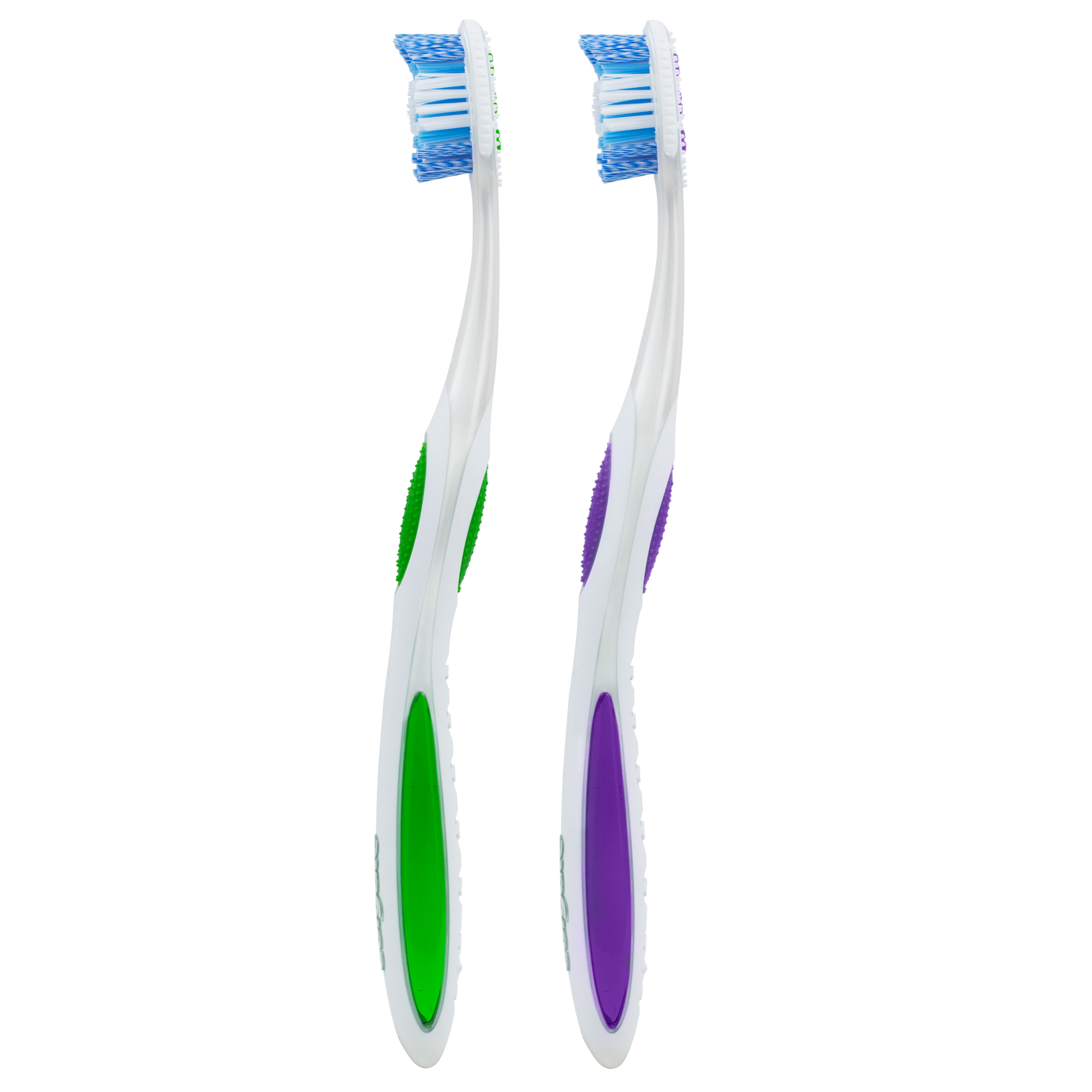
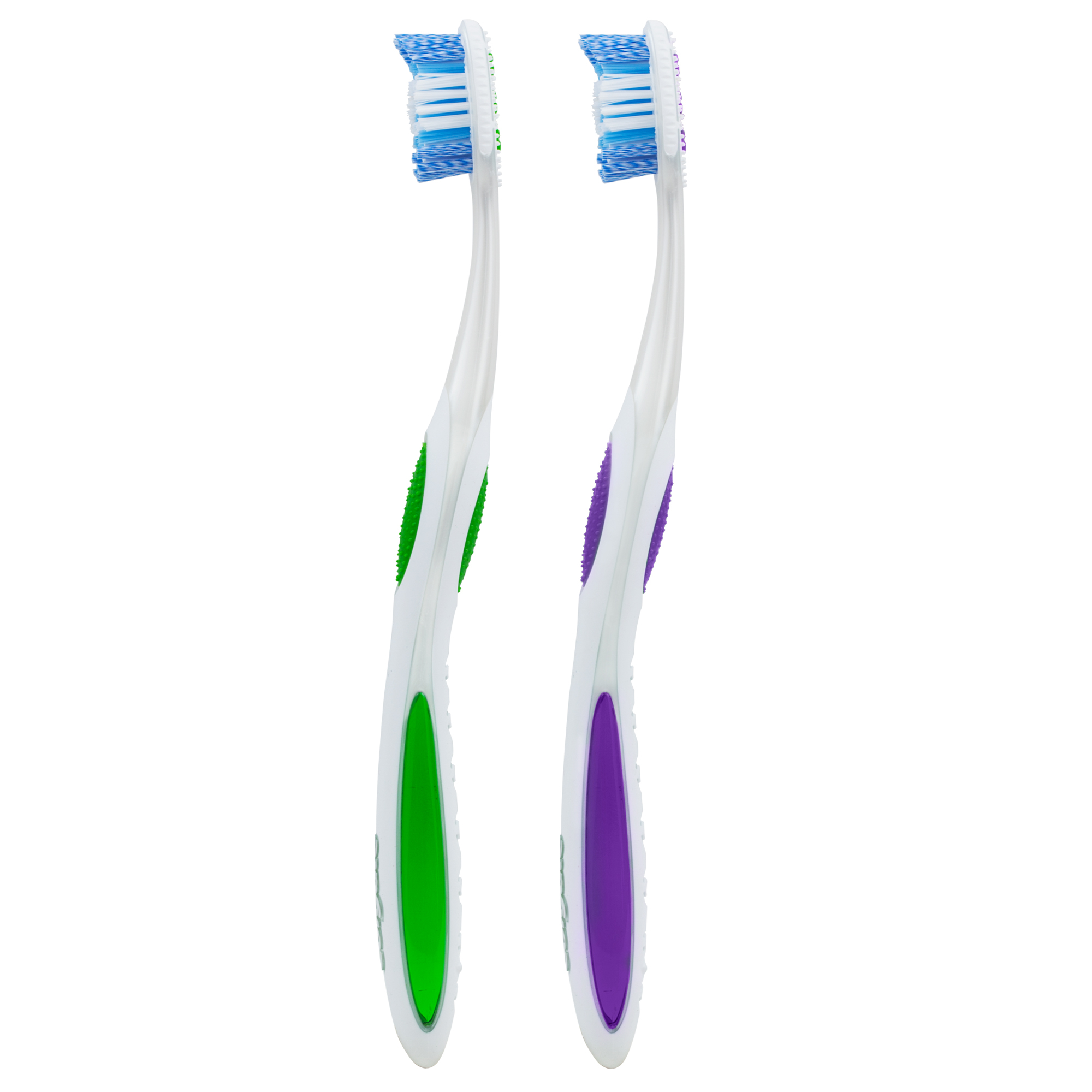
Ergonomic Bi-Material Handle: Built with thermoplastic elastomer (TPE) thumb grips to prevent slippage and ensure controlled brushing pressure, reducing the risk of cervical enamel abrasion caused by excessive force.
Usage Instructions & Dental Care Precautions
Recommended Technique
Dosing & Application: Apply an appropriate quantity of fluoride-containing dentifrice (typically a pea-sized amount for adults) onto the dry or slightly moistened bristle field.
Brushing Method (Modified Bass Technique): Position the bristle filaments at a 45-degree angle relative to the gingival margin. Apply light to moderate pressure using short, gentle vibratory or circular motions across all outer, inner, and chewing surfaces.
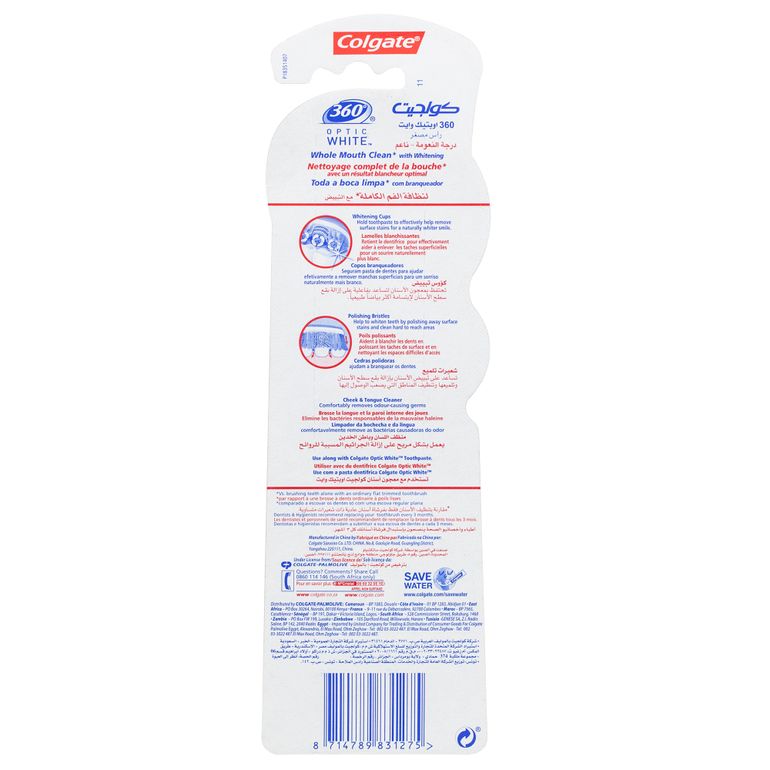
Mucosal Cleaning: Following tooth brushing, extend the tongue and gently sweep the posterior tongue cleaner from the base to the tip of the tongue 3 to 4 times. Lightly glide the outer ridges along the inner cheeks.
Duration & Frequency: Perform complete oral hygiene sessions twice daily for a minimum of two minutes per session.
Safety Precautions & Care
Pressure Management: Avoid excessive lateral force during brushing. Overly aggressive mechanical action can lead to gingival recession and cervical enamel wear.
Replacement Schedule: Replace the toothbrush every 3 months, or sooner if filaments display visible splaying or bending. Damaged bristles lose mechanical cleaning efficacy and may cause soft tissue trauma.
Post-Illness Replacement: It is clinically advised to replace manual toothbrushes following recovery from respiratory or oral viral/bacterial infections to prevent recontamination.
Hygiene & Storage: Thoroughly rinse the brush head under running water after each use to remove residual dentifrice and organic debris. Store upright in an open container to allow air-drying; avoid enclosed caps while wet to prevent bacterial growth.





 Personal Care