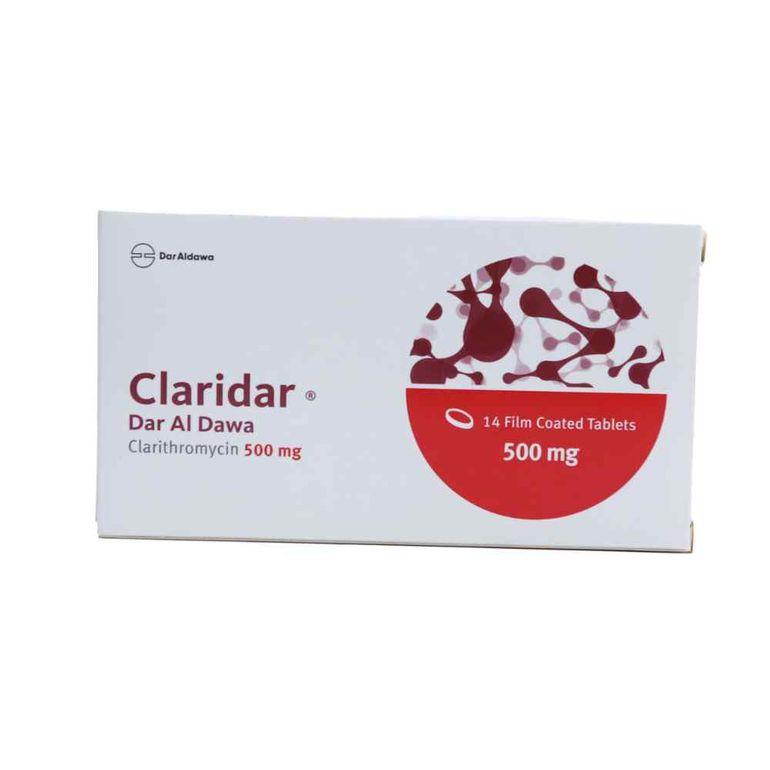
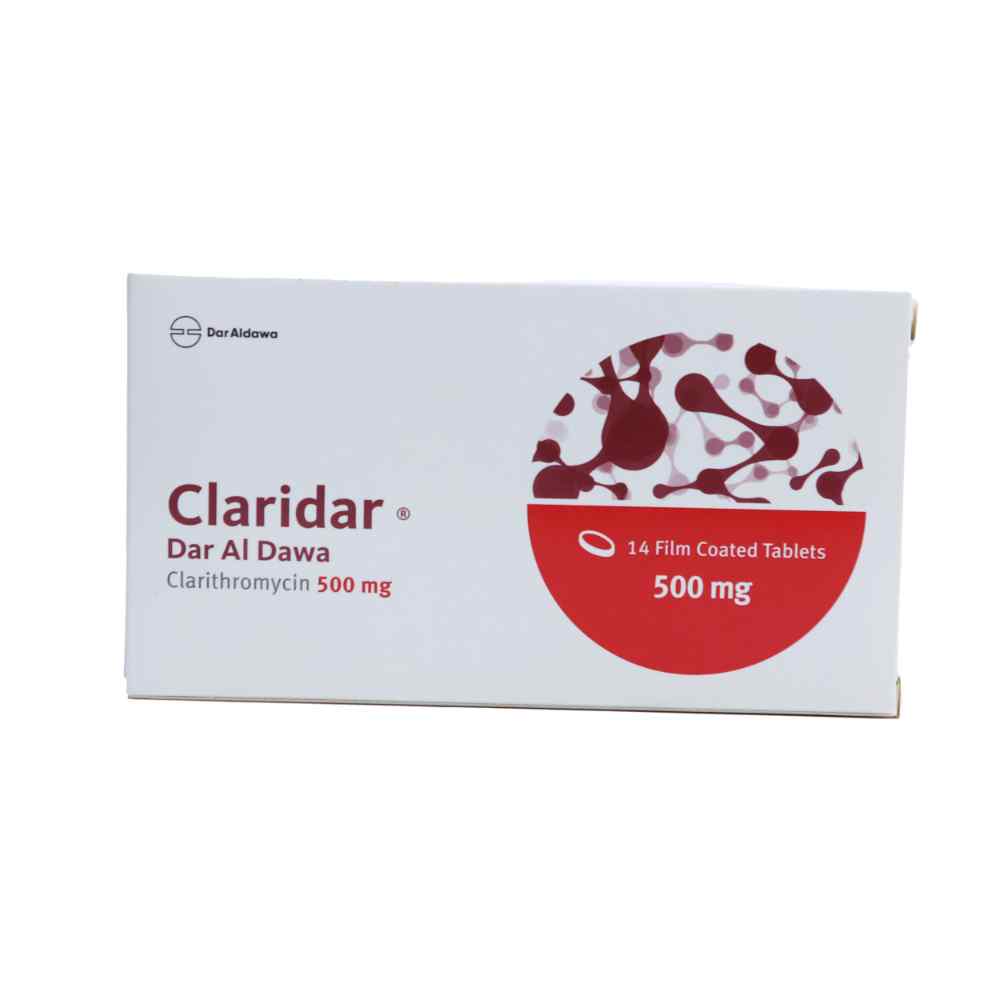
Claridar 500 mg is a broad-spectrum oral antibacterial medication formulated with clarithromycin, a semi-synthetic macrolide antibiotic. It is clinically indicated for the treatment of mild-to-moderate bacterial infections caused by susceptible strains of gram-positive, gram-negative, and atypical microorganisms in adults and pediatric patients aged 12 years and older.
Clarithromycin belongs to the macrolide class and displays acid stability, allowing for predictable gastrointestinal absorption when administered orally with or without food.
Active Ingredients & Mechanism of Action
Active Ingredient
Clarithromycin USP/Ph. Eur.: 500 mg per film-coated tablet.
Pharmacological Class
Macrolide Antibacterial Agent.
Mechanism of Action
Clarithromycin exerts its antimicrobial action by reversibly binding to the 50S ribosomal subunit of susceptible bacterial cells. This action inhibits transpeptidation and translocation during protein synthesis, preventing bacterial growth and replication (bacteriostatic effect). At higher concentration levels against specific pathogens, clarithromycin may also exhibit bactericidal activity.
Indications & Therapeutic Uses
Claridar 500 mg is indicated for the treatment of bacterial infections confirmed or strongly suspected to be caused by susceptible organisms, including:
Upper Respiratory Tract Infections: Streptococcal pharyngitis, tonsillitis, acute maxillary sinusitis, and otitis media.
Lower Respiratory Tract Infections: Acute bacterial exacerbations of chronic bronchitis, community-acquired pneumonia (CAP) caused by Streptococcus pneumoniae, Haemophilus influenzae, or atypical pathogens such as Mycoplasma pneumoniae and Chlamydia pneumoniae.
Skin and Soft Tissue Infections: Uncomplicated skin infections caused by Staphylococcus aureus or Streptococcus pyogenes.
Helicobacter pylori Eradication: As part of a dual or triple drug combination therapy (with a proton pump inhibitor like omeprazole and amoxicillin) to eradicate H. pylori and reduce the recurrence of duodenal ulcers.
Disseminated Mycobacterial Infections: Prevention and treatment of Mycobacterium avium complex (MAC) in immunocompromised patients.
Feature,Details
Active Substance,Clarithromycin (500 mg)
Pharmaceutical Form,Film-Coated Tablets
Pack Size,14 Tablets (2 Blister Strips of 7)
Route of Administration,Oral
Prescription Status,Prescription Only Medicine (POM)
Therapeutic Class,Systemic Antibacterial / Macrolide
Dosage & Administration Guidelines
Important: Claridar 500 mg is a prescription-only antibiotic. Dosage and duration must be determined by a qualified healthcare professional based on the type and severity of the infection.
Recommended Dosage in Adults & Adolescents (≥12 years)
Standard Bacterial Infections (Respiratory, Skin): 250 mg to 500 mg orally every 12 hours (twice daily) for 7 to 14 days.
Severe Respiratory Infections: 500 mg orally every 12 hours.
H. pylori Eradication Regimen: 500 mg twice daily for 7 to 14 days in combination with standard triple therapy regimens.
Administration Instructions
Swallow tablets whole with a sufficient amount of water. Do not crush, chew, or divide the film-coated tablets.
Claridar may be taken with or without food. Taking it with food or milk may help decrease potential gastrointestinal discomfort.
Complete the full course of treatment as prescribed, even if clinical symptoms improve early, to prevent the development of bacterial resistance.
Safety Warnings, Precautions & Contraindications
Contraindications
Claridar 500 mg is strictly contraindicated in patients with:
Known hypersensitivity to clarithromycin, erythromycin, or any other macrolide antibiotic.
History of QT prolongation or ventricular cardiac arrhythmia, including Torsades de Pointes.
Severe hepatic failure combined with renal impairment.
Co-administration with CYP3A4 substrates that prolong the QT interval (e.g., pimozide, astemizole, terfenadine, cisapride) or ergot alkaloids (ergotamine, dihydroergotamine).
Precautions
Renal Impairment: Dosage adjustment is required in patients with severe renal failure (Creatinine clearance less than 30 mL/min).
Hepatic Function: Clarithromycin is primarily metabolized by the liver. Caution should be exercised when administering to patients with impaired hepatic function.
Superinfection: Prolonged or repeated use may result in an overgrowth of non-susceptible bacteria or fungi, including Clostridioides difficile-associated diarrhea (CDAD).
Drug Interactions
Clarithromycin is a potent inhibitor of the cytochrome P450 CYP3A4 enzyme system. Co-administration with drugs metabolized by CYP3A4 (e.g., certain statins like simvastatin, oral anticoagulants, carbamazepine, cyclosporine, and digoxin) requires clinical monitoring or dose modifications to avoid increased plasma concentrations and potential toxicity.
Adverse Reactions
Commonly reported side effects are generally mild and transient, including:
Gastrointestinal disorders (nausea, abdominal pain, diarrhea, dysgeusia/metallic taste).
Transient elevations of liver enzymes.
Headaches or insomnia.
If severe allergic reactions (e.g., anaphylaxis, Stevens-Johnson syndrome) or severe persistent diarrhea occur, discontinue treatment immediately and seek medical attention.
Storage & Handling
Store below 30°C in a dry place, protected from light and moisture.
Keep in the original blister package until ready for use.
Keep out of the reach and sight of children.





 Medication