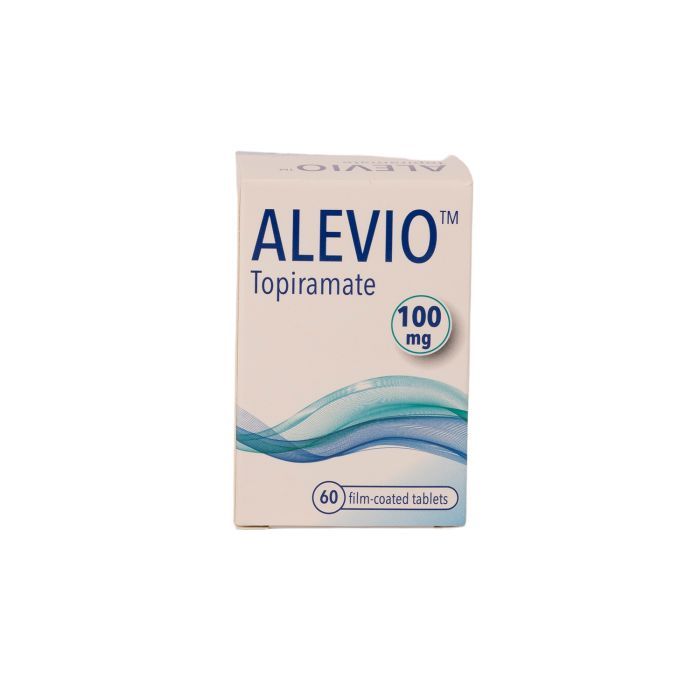
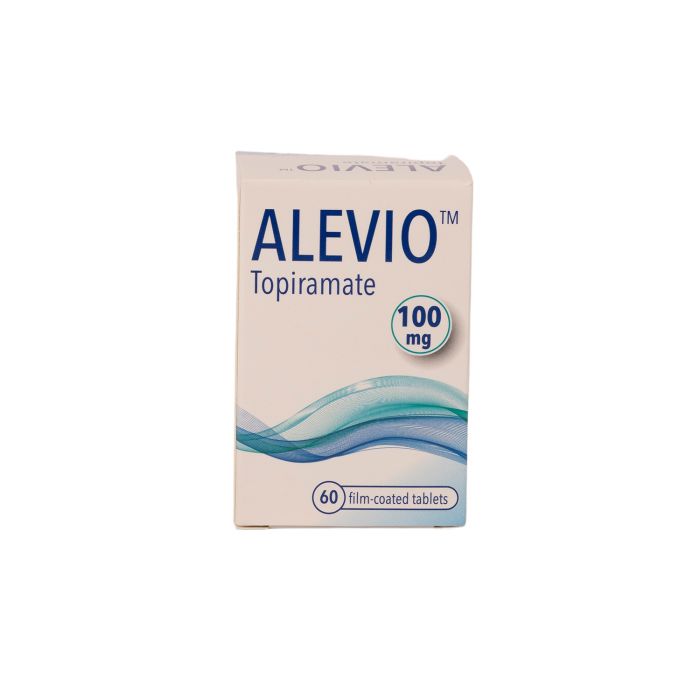
Alevio 100 mg is a prescription antiepileptic drug (AED) formulated with Topiramate as its active pharmaceutical ingredient. Belonging to the class of sulfamate-substituted monosaccharides, topiramate is indicated for the clinical management of neurological disorders, specifically epilepsy and chronic migraine prophylaxis.
Key Clinical Indications & Benefits
Alevio 100 mg plays a central role in long-term neurological disease management. Its major therapeutic applications include:
Seizure Management (Epilepsy)
-
Focal-Onset Seizures: Indicated as monotherapy or adjunctive treatment for adults and pediatric patients experiencing partial-onset seizures with or without secondary generalization.
-
Primary Generalized Tonic-Clonic (PGTC) Seizures: Functions as an effective adjunctive agent in stabilizing neuronal electrical activity during generalized seizure episodes.
-
Lennox-Gastaut Syndrome: Approved as adjunctive therapy for seizures associated with Lennox-Gastaut syndrome in adults and pediatric patients.
Migraine Prophylaxis
Active Ingredient & Mechanism of Action
Active Ingredient
Pharmacological Mechanism
Topiramate exhibits a multifactorial neurochemical profile that stabilizes hyperexcitable neuronal membranes and suppresses excessive electrical discharge:
-
Voltage-Gated Sodium Channel Blockade: Inhibits repetitive firing of action potentials by blocking voltage-dependent sodium channels in a state-dependent manner.
-
GABA Subtype Enhancement: Potentiates the activity of gamma-aminobutyric acid (GABA) at specific non-benzodiazepine sites on GABA A receptors, enhancing inhibitory neurotransmission.
-
Glutamate Receptor Antagonism: Antagonizes the AMPA/kainate subtype of glutamate receptors, attenuating excitatory neuronal signaling pathways.
-
Carbonic Anhydrase Inhibition: Exerts weak inhibitory effects on carbonic anhydrase isoenzymes (CA-II and CA-IV), which may contribute to its clinical profile and side-effect spectrum.
Technical Specifications & Product Summary
| Attribute |
Clinical Specification |
| Brand Name |
Alevio |
| Active Substance |
Topiramate |
| Strength |
100 mg per tablet |
| Dosage Form |
Film-coated oral tablet |
| Pack Size |
60 tablets |
| Pharmacological Class |
Anticonvulsant / Anti-migraine agent |
| Prescription Status |
Prescription Only Medicine (POM) |
Usage Instructions & Dosing Principles
Dosing schedules for Alevio 100 mg must be strictly individualized and monitored by a qualified healthcare practitioner.
General Administration
-
Administration: Take tablets orally with a sufficient volume of water. Tablets can be taken with or without food.
-
Tablet Integrity: Film-coated tablets should be swallowed whole; do not crush, chew, or split them, as topiramate has a bitter taste.
-
Hydration Requirement: Patients must maintain adequate fluid intake throughout treatment to reduce the risk of nephrolithiasis (kidney stones).
Titration Schedule
To minimize central nervous system (CNS) adverse reactions, topiramate therapy is typically initiated at a lower dose (e.g., 25 mg or 50 mg daily) and gradually titrated upwards in weekly increments until an effective therapeutic dose of 100 mg to 400 mg daily is attained, as determined by the prescribing physician.
Safety Precautions, Warnings & Contraindications
Contraindications
-
Hypersensitivity: Known hypersensitivity to topiramate or any inactive excipients in the formulation.
-
Pregnancy: Topiramate can cause fetal harm (including increased risk of major congenital malformations such as oral clefts and neurodevelopmental disorders) when administered during pregnancy. It should only be prescribed to women of childbearing potential when effective contraception is utilized and after thorough medical evaluation.
Important Warnings & Precautions
-
Metabolic Acidosis: Topiramate causes hyperchloremic, non-anion gap metabolic acidosis by inhibiting carbonic anhydrase. Baseline and periodic serum bicarbonate monitoring is recommended.
-
Acute Myopia & Secondary Angle-Closure Glaucoma: A syndrome consisting of acute myopia associated with secondary angle-closure glaucoma has been reported. Symptoms typically occur within 1 month of initiation and require immediate discontinuation under medical guidance.
-
Oligohidrosis & Hyperthermia: Reduced sweating (anhidrosis/oligohidrosis) and elevated body temperature can occur, primarily in pediatric patients. Adequate cooling and monitoring in high ambient temperatures are essential.
-
Cognitive/Neuropsychiatric Adverse Effects: May cause cognitive dysfunction (e.g., psychomotor slowing, difficulty with concentration, speech/language problems) and somnolence or fatigue. Patients should exercise caution when operating machinery or driving.
-
Renal Calculi (Kidney Stones): Due to carbonic anhydrase inhibition, topiramate increases the risk of renal stone formation. Hydration is vital.
-
Abrupt Discontinuation: Antiepileptic drugs, including Alevio, must be tapered gradually under physician guidance to minimize the potential for rebound seizures or increased seizure frequency.
Storage Conditions
-
Store below 30°C (86°F) in a dry place.
-
Keep the container tightly closed to protect from moisture.
-
Keep out of reach and sight of children.





 Medication