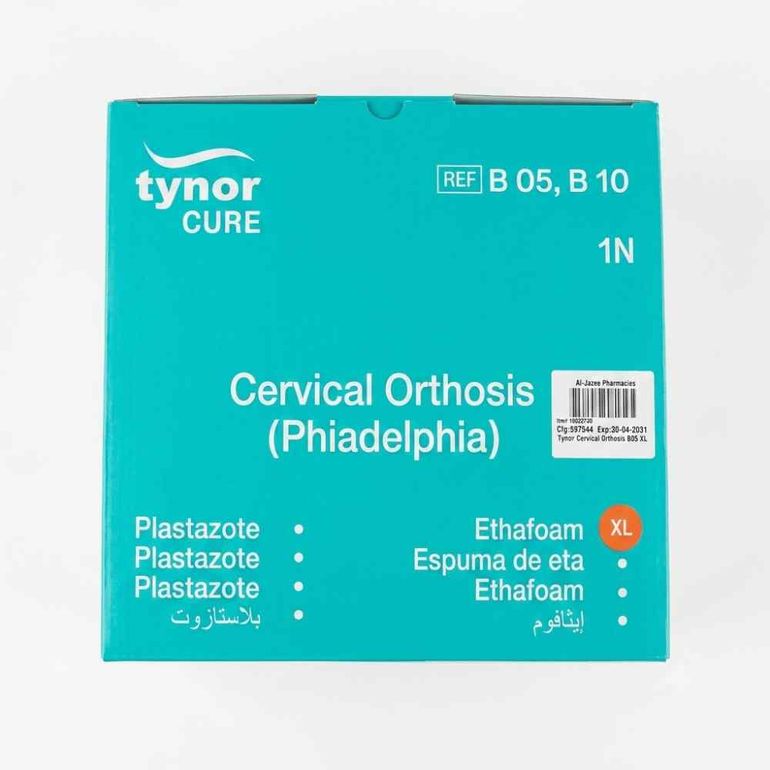
Tynor Cervical Orthosis B05 (Size X-Large) is a high-density orthopedic device engineered for the rigid immobilization of the cervical spine. This medical-grade orthosis is indicated for patients requiring strict restriction of cervical flexion, extension, and rotation movements. By stabilizing the neck and upper spine, the B05 orthosis facilitates the recovery process for acute spinal trauma, post-operative stabilization, and the management of severe cervical conditions. Its design emphasizes structural integrity while ensuring accessibility for essential clinical procedures, including tracheostomy access.
Key Medical Benefits and Clinical Value
1. Rigid Cervical Stabilization
The primary function of the Tynor Cervical Orthosis B05 is to provide comprehensive rigid immobilization. This is critical in the prevention of secondary spinal injury in patients with unstable cervical fractures, severe ligamentous strain, or post-surgical spinal fusion. By limiting the range of motion (ROM) in the sagittal, coronal, and transverse planes, the device minimizes mechanical stress on the cervical vertebrae.
2. Ergonomic Design and Physiological Alignment
The orthosis is anatomically contoured to maintain the cervical spine in a neutral position. This alignment is vital for reducing neural tension and minimizing pressure on the cervical discs and nerve roots, which is particularly beneficial in treating chronic cervical radiculopathy or severe whiplash-associated disorders (WAD).
3. Tracheostomy Access and Clinical Utility
A distinct feature of the B05 orthosis is the provision for windpipe access. This is essential in clinical environments where patient monitoring or emergency intervention, such as tracheostomy management or ventilation assistance, may be required without the need to remove the orthosis, thereby maintaining continuous spinal stability.
Material Composition and Structural Mechanism
High-Density Polyethylene Shell
The exterior frame is constructed from high-density polyethylene (HDPE). This material provides the necessary rigidity for immobilization while remaining lightweight. The structure is designed to distribute pressure evenly across the sternum, clavicle, and occipital regions, reducing the risk of pressure ulcers during prolonged wear.
Anatomical Padding and Hypoallergenic Lining
The interior of the orthosis is lined with high-grade, hypoallergenic foam padding. The design mechanism focuses on:
Pressure Distribution: The padding contours to the patient’s anatomy to prevent localized skin breakdown.
Skin Integrity: The hypoallergenic material minimizes the risk of dermatological irritation, supporting comfort for patients requiring extended immobilization periods.
Usage Instructions and Safety Precautions
Proper Application Technique
Positioning: Ensure the patient is in a stable, neutral position. The chin should be comfortably placed within the chin cup, and the occipital support should rest firmly at the base of the skull.
Adjustment: Secure the hook-and-loop closure straps to achieve a firm but comfortable fit. The orthosis must be tight enough to restrict movement but must not impede circulation or respiration.
Alignment Verification: Verify that the orthosis is centered, ensuring that the lateral supports and chin rest do not apply undue pressure on the mandibular nerves or carotid arteries.
Clinical Precautions and Safety Guidelines
Professional Guidance: This device should be applied under the direction of a healthcare professional, such as an orthopedic surgeon or physical therapist. Improper fit may lead to inadequate stabilization or physical discomfort.
Skin Monitoring: Patients or caregivers should regularly inspect the skin underneath the orthosis for signs of redness, abrasions, or pressure sores, especially in patients with reduced sensation.
Maintenance: The interior padding may be wiped with a mild, non-abrasive detergent and damp cloth. Ensure the device is thoroughly dry before re-application to maintain skin hygiene.
Contraindications: If the patient experiences increased neurological symptoms, such as numbness, tingling, or difficulty breathing while wearing the orthosis, remove the device cautiously and consult a medical provider immediately.





 Brands