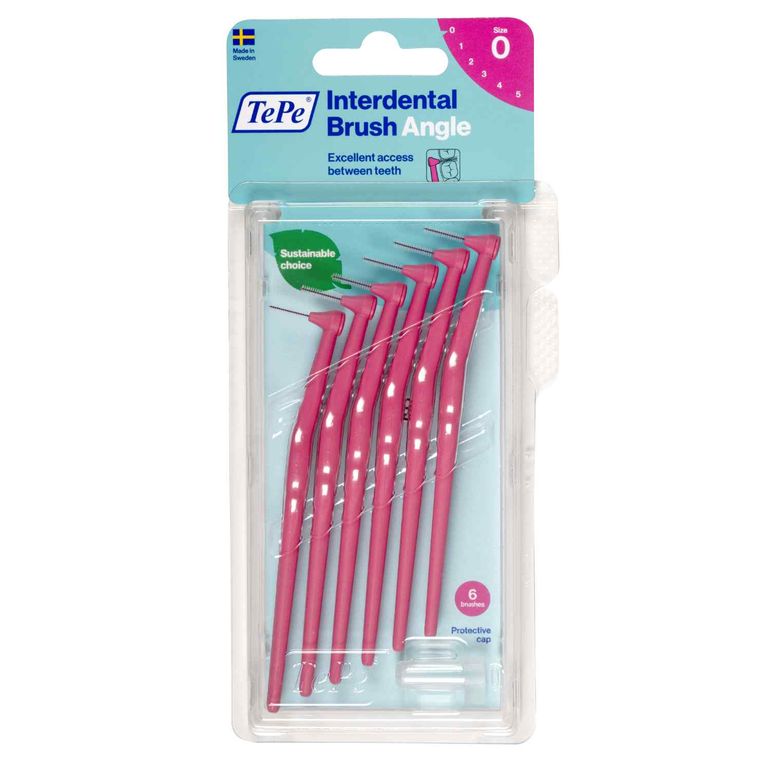
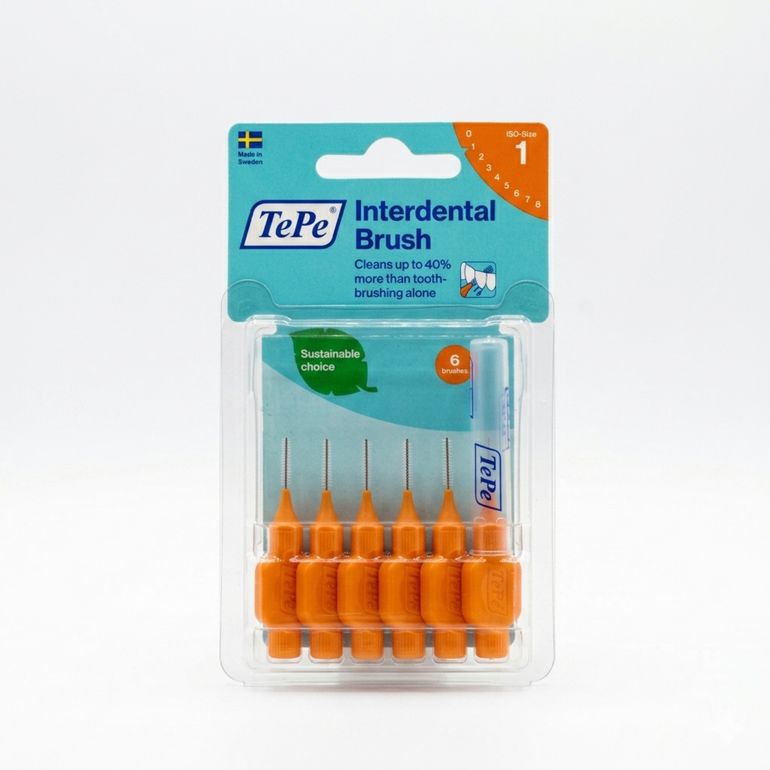
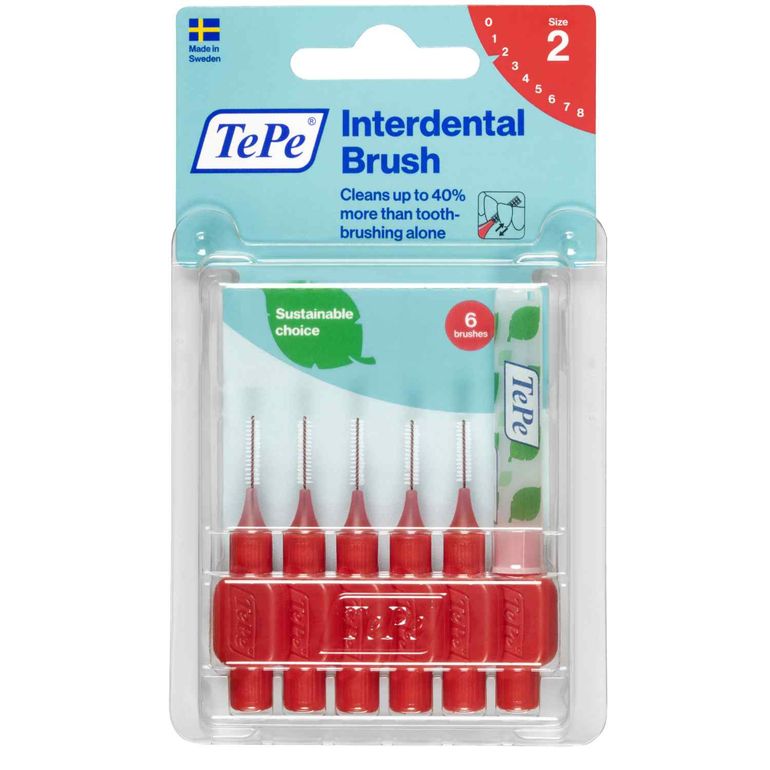
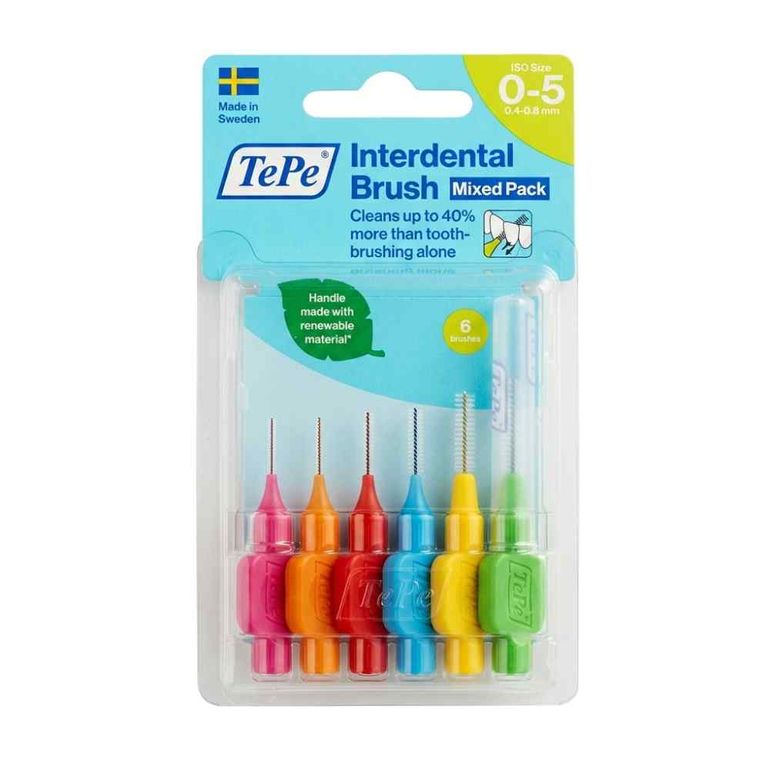
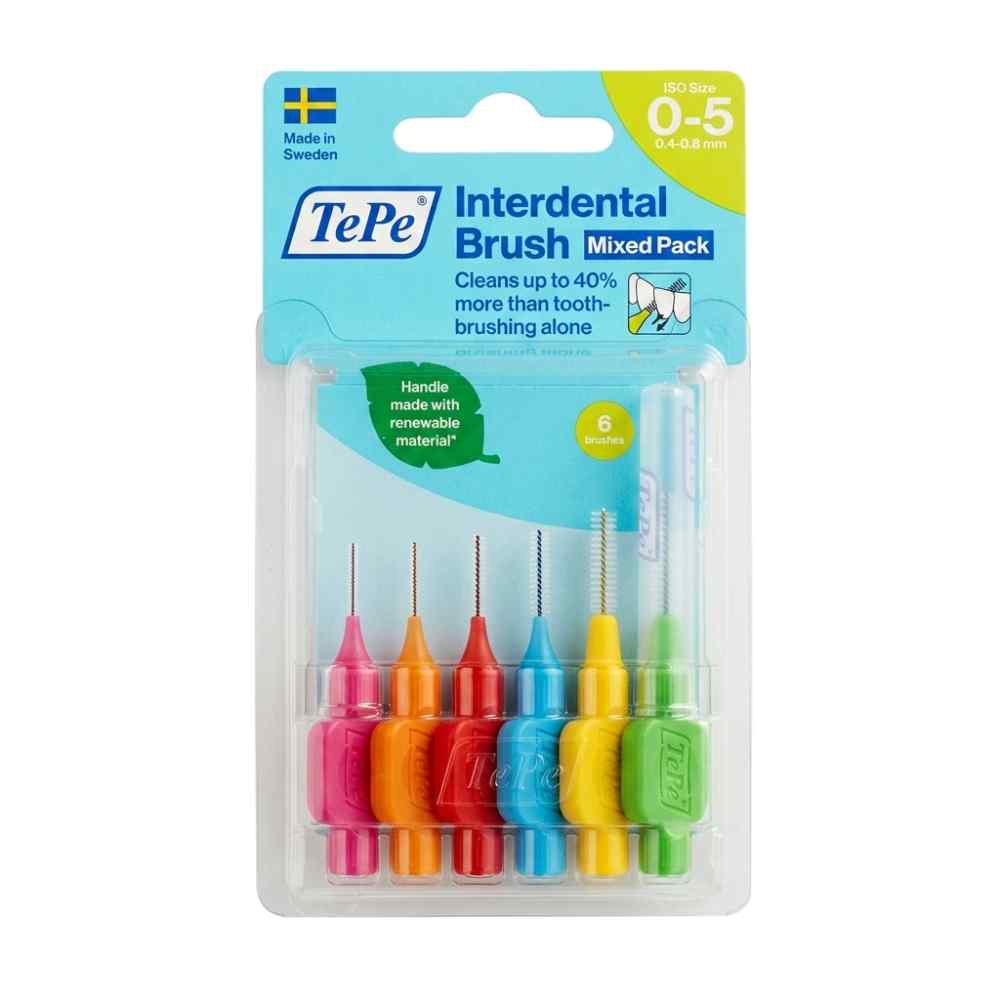
TePe Interdental Brush Mixed Pack (Sizes 0-5) is a clinically developed, professional-grade oral hygiene device engineered to mechanically disrupt and remove oral biofilm (plaque) and detritus from proximal tooth surfaces. Packaged as a 6-piece selection spanning six distinct ISO-standardized sizes (0.4mm to 0.9mm), this configuration allows patients to accurately accommodate varying anatomical interdental spaces. Developed in collaboration with dental specialists, these brushes serve as a critical component in the therapeutic management and prophylaxis of periodontal diseases, gingivitis, and proximal dental caries.
Key Medical Benefits & Clinical Value
1. Mechanical Disruption of Interdental Biofilm
Standard toothbrushes are anatomically limited to the buccal, lingual, and occlusal surfaces, leaving up to 40% of the tooth structure uncleaned. The cylindrical and tapered bristle configurations of the TePe interdental system physically penetrate the interproximal gaps, removing pathogenic bacterial colonies that accumulate within the interdental col—the vulnerable tissue zone where periodontal disease typically originates.
2. Prevention and Management of Gingival Inflammation
Persistent plaque retention in proximal spaces triggers an aggressive localized immune response, manifesting as chronic gingivitis (bleeding, erythema, and edema). Regular clinical deployment of sized interdental brushes reduces index scores for bleeding on probing (BOP) by thoroughly clearing the sulcus, promoting soft-tissue healing and preventing progression toward irreversible periodontitis or alveolar bone resorption.
3. Maintenance of Orthodontic and Implant Fixations
Patients undergoing active orthodontic treatment or those with fixed prosthodontics (bridges, crowns, and dental implants) present highly complex surfaces prone to rapid plaque stagnation. The mixed sizing profile enables precise mechanical maintenance around brackets, abutments, and sub-gingival margins where traditional dental floss may snag, break, or fail to achieve adequate surface adaptation.
Materials & Mechanical Design
Biocompatibility and Structural Profile
The manufacturing architecture of TePe interdental brushes prioritizes oral tissue protection and non-toxic durability:
Plastic-Coated Filament Wire: The central structural core consists of a high-tensile, surgical-grade wire completely coated in a smooth, medical-grade polyurethane membrane. This clinical design prevents galvanic shock reactions upon contact with metallic restorations (amalgams/gold) and protects fragile titanium implant abutments from surface scratching or micro-abrasion.
Premium Recyclable Polyamide Bristles: The bristles are constructed from optimized, end-rounded filaments that glide smoothly across the dentin and cementum surfaces. This minimizes the risk of mechanical abrasion to the tooth structure while effectively sweeping out impacted food particles and bacterial matrices.
Ergonomic, Flat Grip System: The handle is composed of a rigid, monomer-free polypropylene backing that provides a secure, non-slip grip, allowing the patient to maintain precise control over the angle and pressure applied during interproximal insertion.
Usage Instructions & Clinical Guidelines
Step-by-Step Mechanical Debridement Guide
To achieve optimal therapeutic results without causing traumatic injury to the gingival tissues, observe the following protocol:
Size Selection: Begin with the smallest diameter brush (Size 0, Pink, 0.4mm). Insert the brush gently between the teeth at the gum line. The brush should fit comfortably; the bristles must engage the tooth surfaces, but the central wire should never encounter resistance or force. Advance through the mixed pack sizes until the correct individual fit is determined for each distinct interdental gap.
Insertion Technique: Hold the handle firmly. Align the brush horizontally at the interdental entry point. Gently push the device through the space until it exits the opposite side. If managing posterior molars, slightly curve the flexible neck of the brush to achieve a safer entry angle.
Mechanical Cleansing: Move the brush horizontally back and forth approximately two to three times per interdental space. Avoid vertical scrubbing motions, which can cause micro-tears in the interdental papilla.
Post-Procedure Hygiene: Thoroughly rinse the bristles under clean running water after clearing each individual space to prevent cross-depositing bacterial matter. Do not use toothpaste on the brush unless explicitly directed by a dental professional, as standard dentifrices contain abrasives that can wear down the proximal enamel when used with a concentrated wire core.
Replacement Schedule: Replace the individual brush once the filaments show signs of splaying, flattening, or structural wear, or when the plastic-coated wire shows signs of deformation (typically every 7 to 10 days of regular use).
Essential Clinical Precautions
Force Contraindication: Never force a brush into a tight interdental space. If insertion is restricted, transition immediately to a smaller size or utilize specialized dental floss to avoid soft-tissue laceration or permanent gingival recession.
Initial Bleeding Response: Mild gingival bleeding may occur during the first few days of initiation. This is an indication of localized inflammation caused by pre-existing plaque accumulation. If bleeding persists beyond one week of daily, correct application, suspend use and seek a clinical evaluation from your dental surgeon.





 Brands