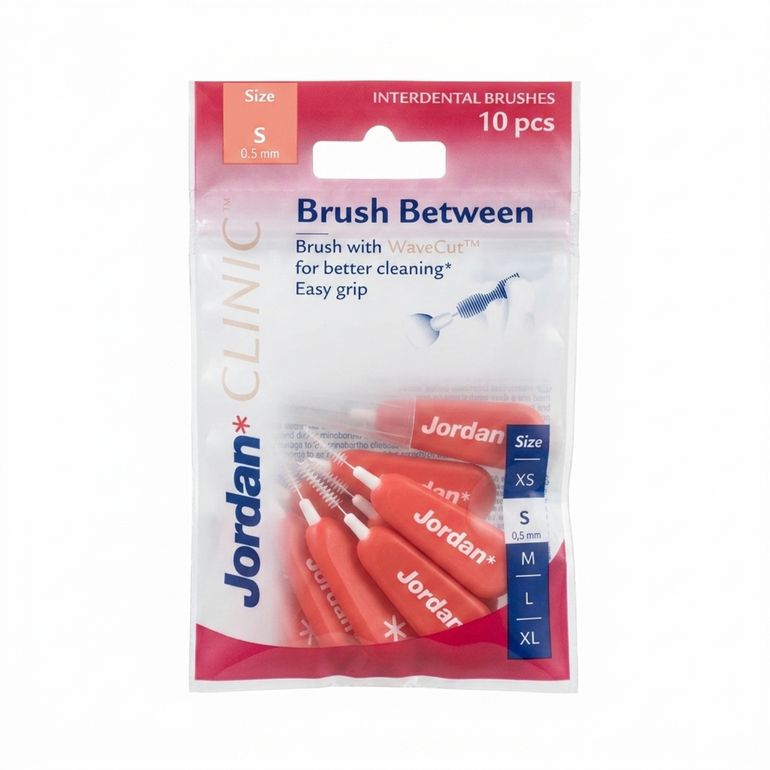
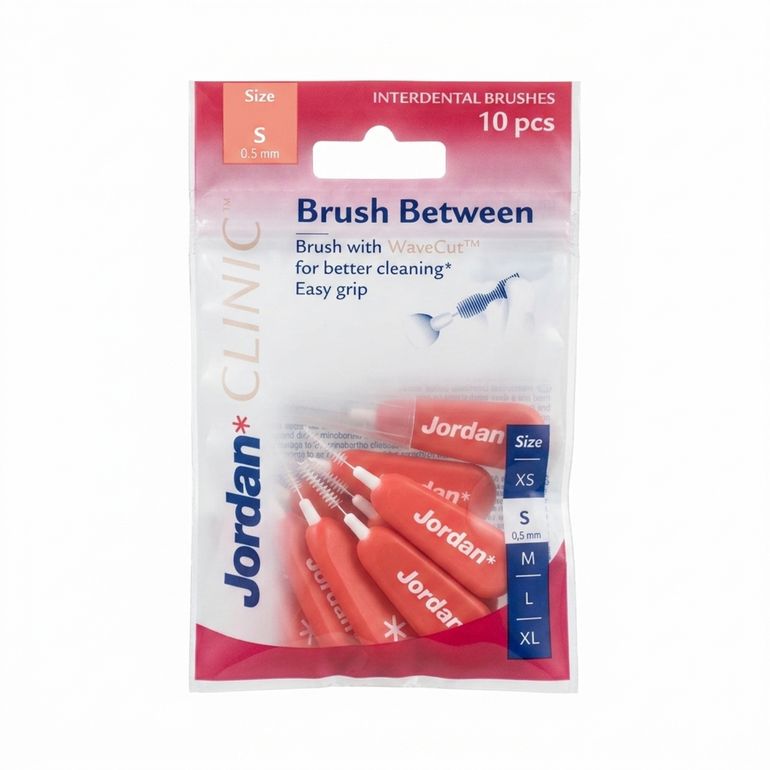
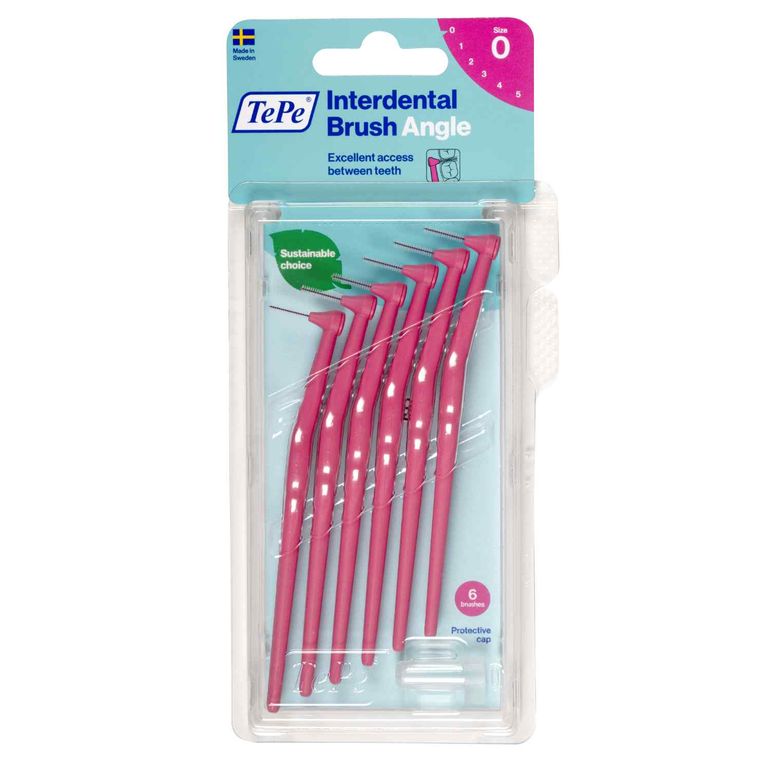
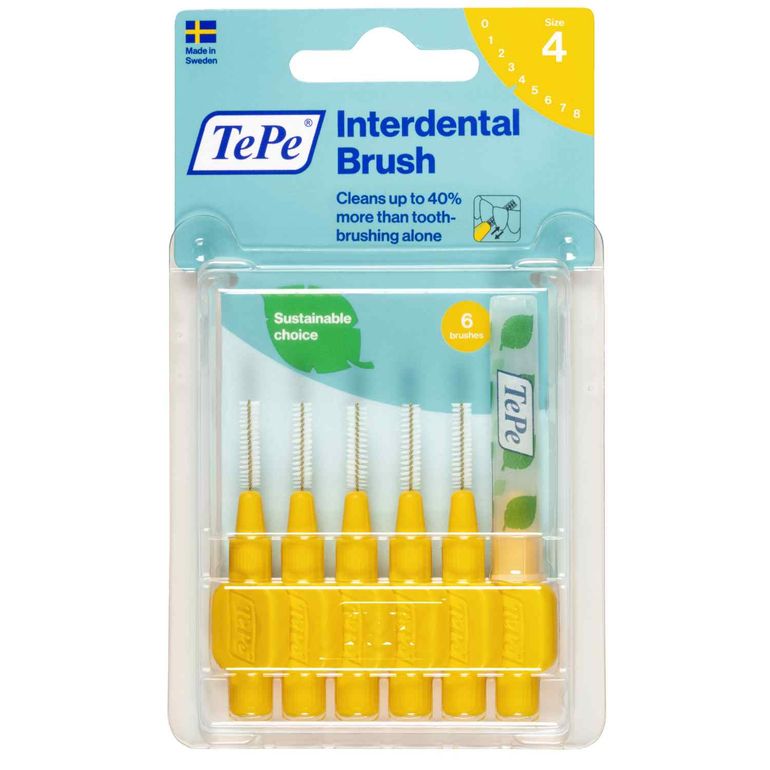
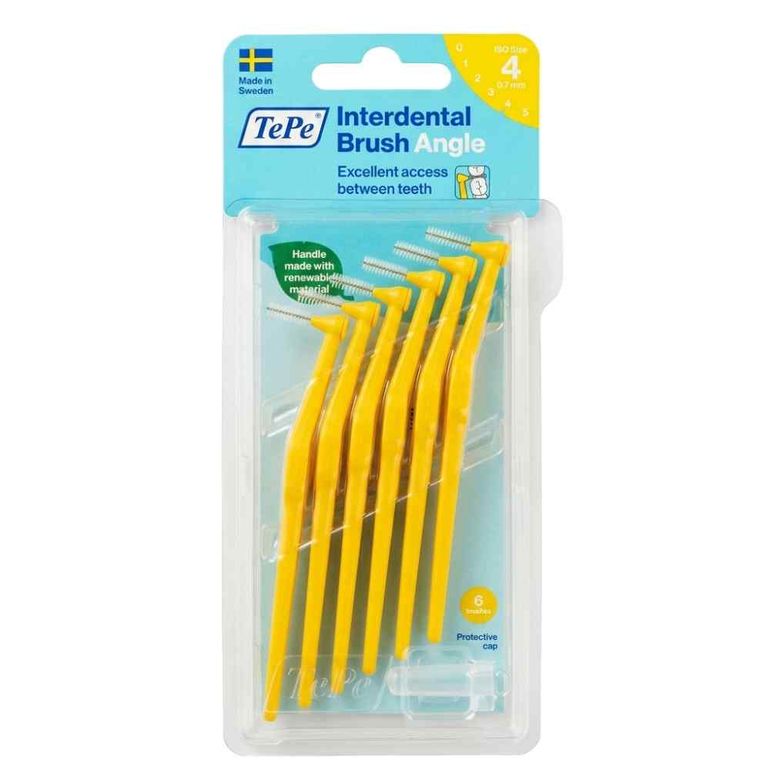
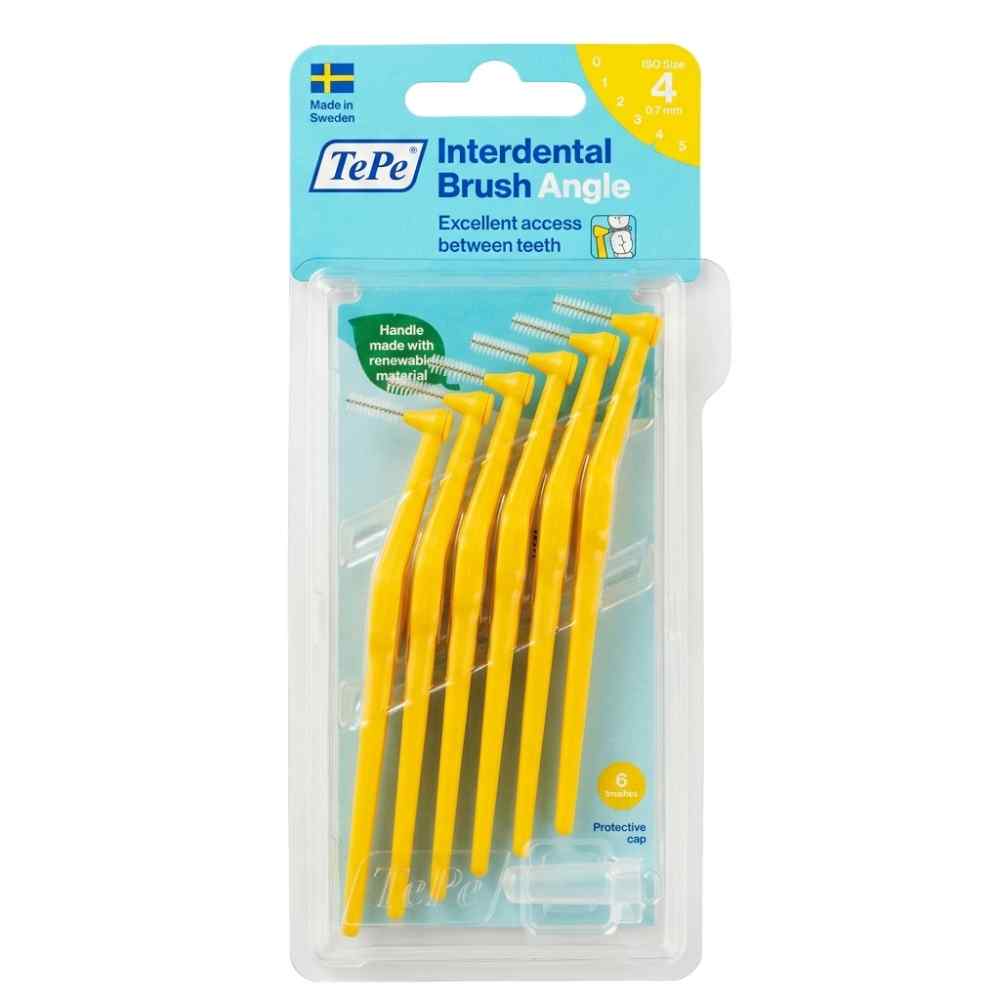
TePe Interdental Brush Angle (Yellow, Size 4, 0.7mm) is a clinically developed oral care instrument designed for precise mechanical plaque removal from the proximal surfaces of dentition. Engineered specifically for patients presenting with medium-sized interdental spaces, orthodontic appliances, or fixed prosthodontics, this package contains six individually compiled angled brushes.
From a dental health perspective, this product addresses the limitations of standard toothbrushes, which fail to clean the approximately 40% of tooth surfaces hidden between the teeth, thereby acting as a critical prophylactic aid against chronic periodontal diseases.
Key Medical Benefits & Clinical Value
1. Mechanical Disruption of Interproximal Biofilm
The primary cause of both dental caries and localized gingivitis is the accumulation of pathogenic biofilm (plaque) between the teeth. The 0.7mm high-quality filaments are designed to physically disrupt and eliminate this bacterial matrix from the interdental space, helping to prevent the demineralization of enamel and the subsequent development of interproximal cavities.
2. Reduction of Gingival Inflammation and Bleeding Indices
Regular utilization of an interdental brush stimulates the interdental papilla while gently removing subgingival calculus precursors. Clinical indices show that incorporating a tailored 0.7mm interdental cleaning routine significantly lowers the Gingival Bleeding Index (GBI) and assists in reversing early-stage gingivitis before it progresses to irreversible periodontitis or alveolar bone loss.
3. Ergonomic Management of Posterior Dentition
The distinct angled brush head provides a continuous, pre-set approach angle tailored for the challenging anatomical geometry of premolars and molars. This eliminates the necessity for manual bending, ensuring that patients with limited manual dexterity or macroglossia can achieve consistent, uniform plaque clearance across posterior interproximal sites.
Technical Specifications & Protective Design Mechanisms
Material Composition and Safety
Plastic-Coated Stainless Steel Wire: The central core wire is coated in a medical-grade polyurethane polymer layer. This mechanism ensures that the metallic wire never makes direct contact with sensitive dentin, root cementum, or titanium implant abutments, eliminating the risk of galvanic shock or surface scratching.
Optimized Polyamide Filaments: The bristles are crafted from rounded, highly durable polyamide fibers that maximize plaque trap-and-removal capability while preserving the structural integrity of soft epithelial attachment tissues.
Long Ergonomic Handle: Crafted from recyclable polypropylene, the elongated flat handle offers a secure, slip-free grip to enable steady controlled tactile feedback during interdental insertion.
Usage Instructions & Clinical Precautions
Step-by-Step Mechanical Cleaning Guide
To ensure clinical efficacy and avoid hard or soft tissue trauma, the following technique should be executed once daily, preferably before nocturnal brushing:
Selection Verification: Ensure that the 0.7mm (Size 4) gauge matches your anatomical interdental space. The brush should slide smoothly with a slight resistance, but it must never be forcefully wedged into a tight space.
Insertion: Align the brush tip at the base of the interdental triangle, slightly tilting the brush to follow the contours of the gums. Gently slide the instrument into the gap from the buccal (outer) side.
Mechanical Cleansing: Move the brush horizontally in a gentle back-and-forth motion 2 to 3 times. Do not rotate or spin the brush while it is placed interdentally, as this compromises filament alignment.
Posterior Adaptation: For posterior molars, insert the brush from the lingual/palatal (inner) aspect if necessary to achieve total surface debridement.
Sanitization: Rinse the brush bristles under running tap water after cleaning each individual gap. Replace the protective cap once dry. Discard the brush when the filaments show visible wear or wire deformity, typically after 7 to 14 days of use.
Crucial Clinical Precautions
Avoid Forced Insertion: Forcing a 0.7mm brush into a space smaller than its nominal width can result in immediate gingival recession, mechanical papilla trauma, or enamel abrasion.
Initial Bleeding Response: Mild gingival bleeding may occur during the first few days of initiation due to the disruption of pre-existing chronic inflammatory tissue. If bleeding persists beyond one week, discontinue use and consult a dental professional.





 Brands