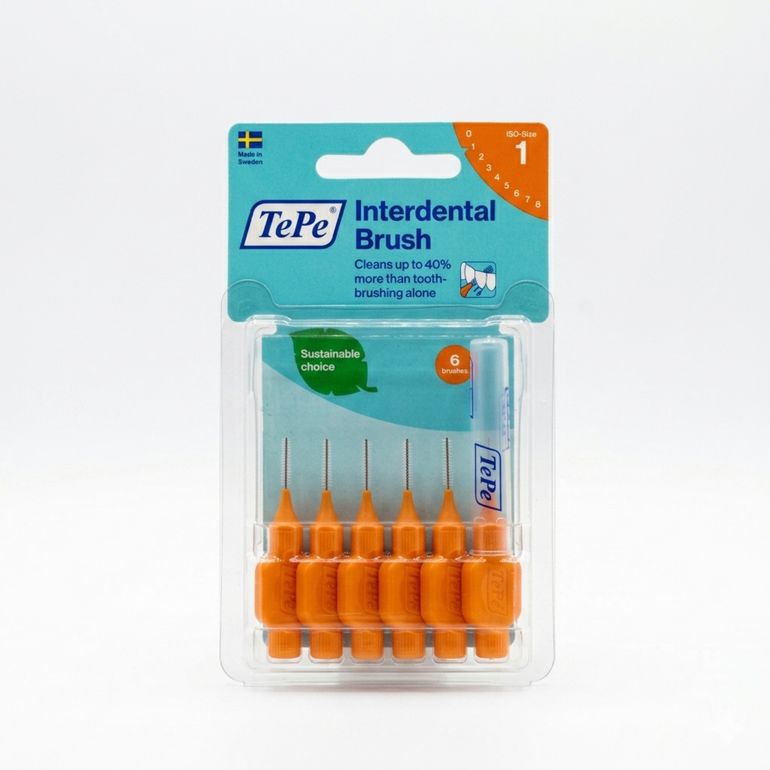
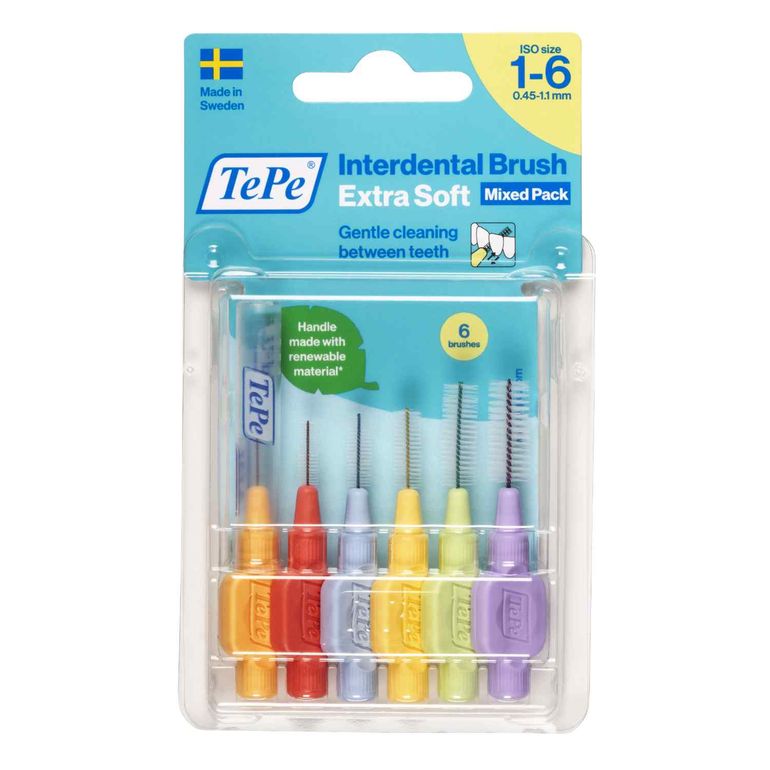
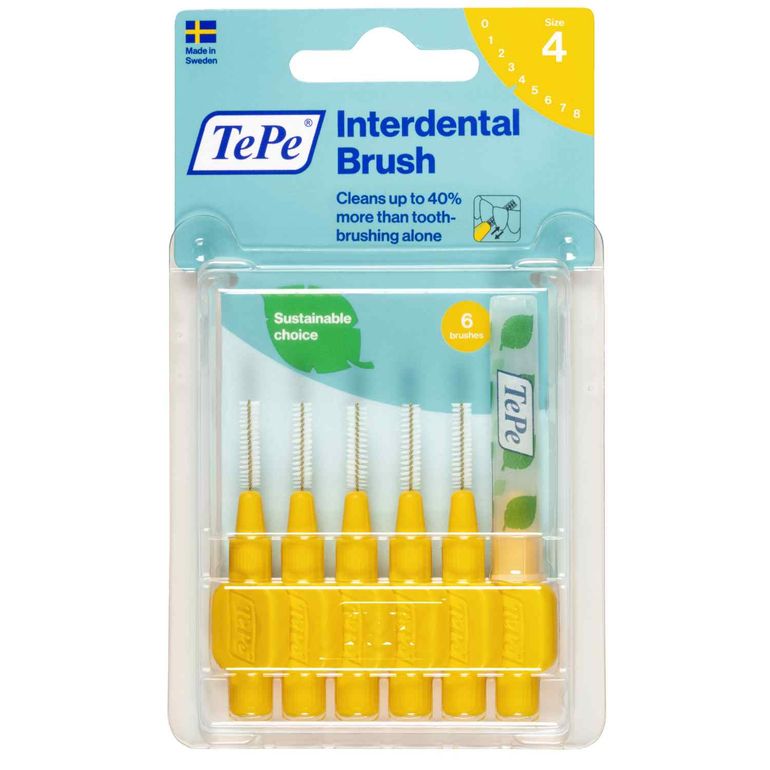
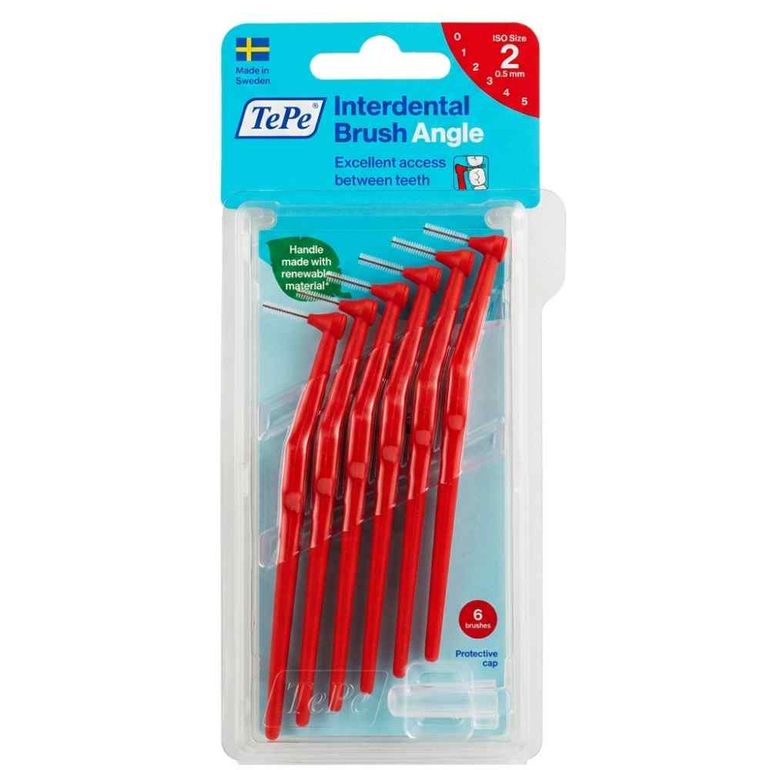
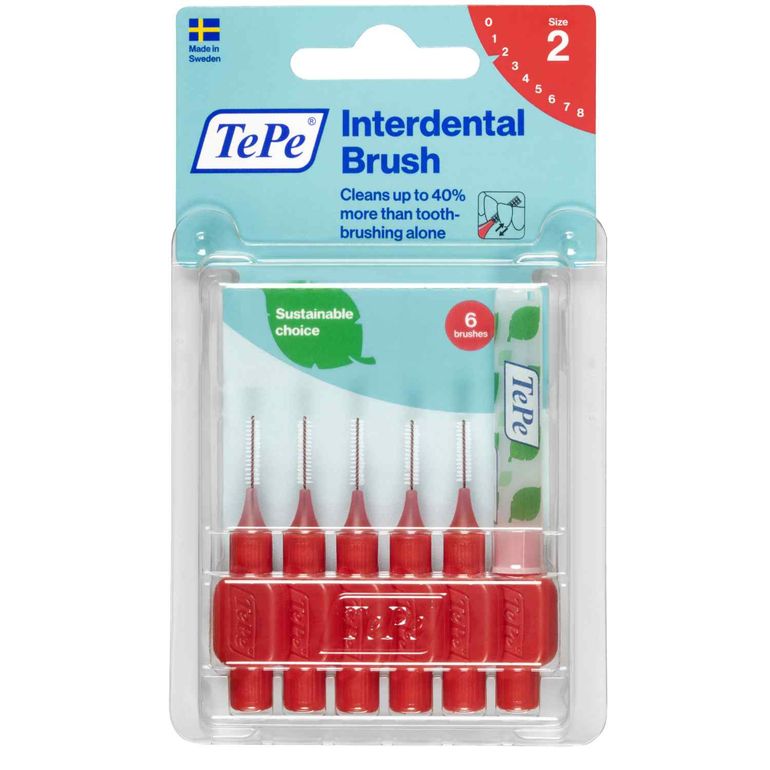
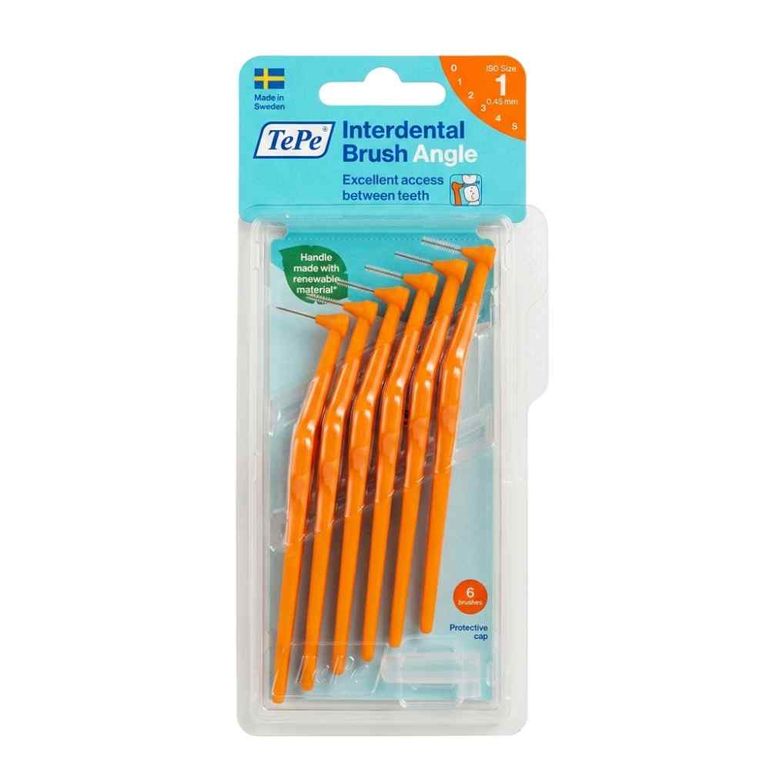
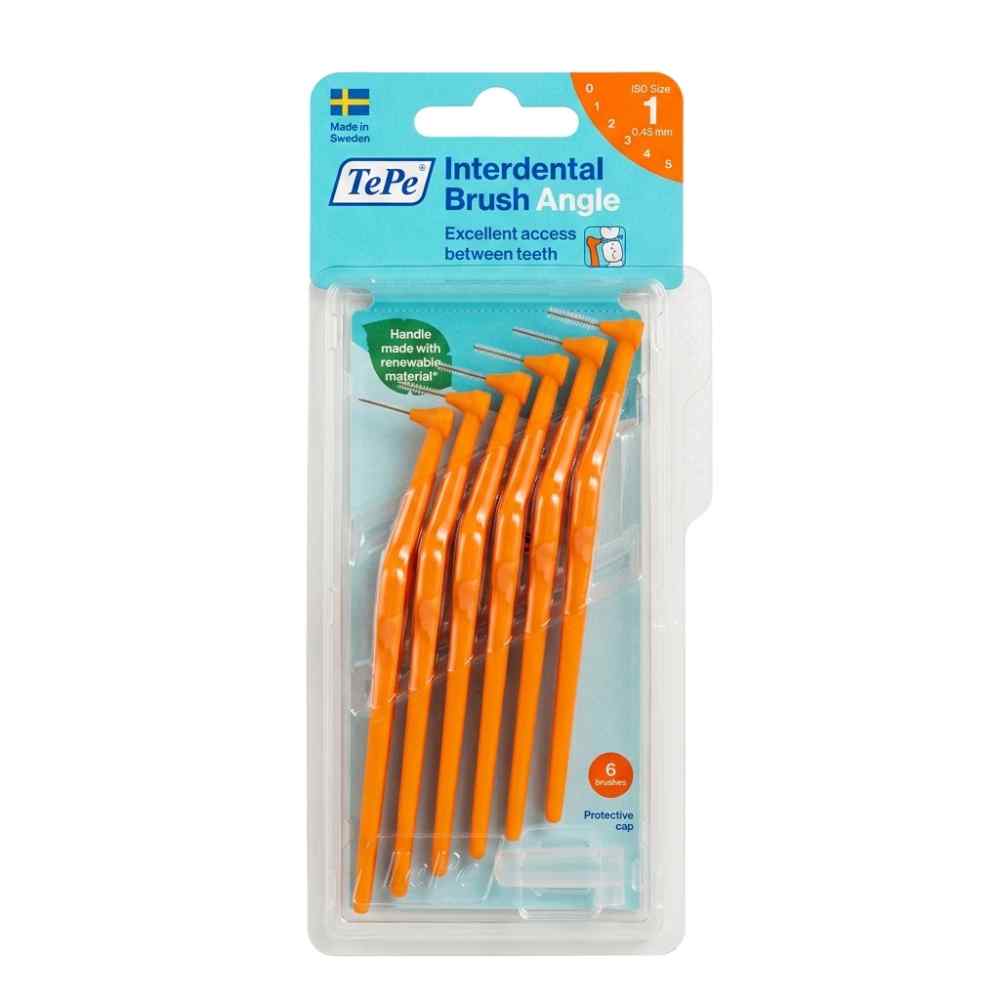
TePe Angled Interdental Brushes (Size 1, 0.45mm) are precision-engineered oral hygiene instruments designed to facilitate the mechanical removal of dental biofilm and food debris from interproximal spaces. These spaces, situated between adjacent teeth, are often inaccessible to standard nylon-bristled toothbrushes. This specific size—color-coded orange for a 0.45mm clearance—is indicated for individuals with narrow to moderate interdental gaps, orthodontic appliances, or fixed dental prosthetics where periodontal health requires localized maintenance.
Key Medical Benefits & Clinical Value
1. Biofilm Control and Gingival Health
The primary clinical objective of interdental cleaning is the disruption of pathogenic biofilm, which is the leading cause of gingivitis and periodontitis. By reaching anatomical areas where the standard toothbrush fails, these brushes reduce the microbial load in the interproximal sulcus, thereby mitigating inflammation of the gingival papilla.
2. Management of Orthodontic and Prosthetic Areas
Patients undergoing orthodontic treatment or those with fixed bridges and crowns face a heightened risk of localized plaque accumulation. The angled neck design of these brushes provides the ergonomic control necessary to maneuver around brackets, wires, and pontics without inducing trauma to the periodontal soft tissues.
3. Prevention of Interproximal Caries
Dental decay frequently originates in the interproximal contact areas. Consistent use of interdental brushes aids in the removal of fermentable carbohydrates and plaque acids, which are significant risk factors for the development of interproximal (Class II) caries.
Technical Specifications and Design Mechanism
Engineering Design
Angled Neck: The long, ergonomically contoured handle features a pre-angled neck, allowing the brush head to reach posterior regions of the oral cavity effectively without requiring excessive opening of the mandible.
Size Calibration: The orange-coded wire core is calibrated to a 0.45mm diameter, ensuring compatibility with tight interdental spaces while preventing undue pressure on the enamel or gingival margin.
Coated Wire Core: The metal wire core is plastic-coated to protect against mechanical abrasion of the tooth surface and to ensure patient comfort, particularly in individuals with dentine hypersensitivity.
Material Composition
The brush filaments are manufactured from high-quality, resilient polyamide (nylon) filaments. These materials are selected for their durability and efficacy in biofilm removal while maintaining a soft interface with the gingival tissue to prevent mechanical irritation.
Usage Instructions & Safety Precautions
Clinical Guidance for Administration
To ensure effective biofilm disruption and tissue safety, follow these guidelines:
Insertion: Gently insert the brush head into the interproximal space. Do not use excessive force. If the brush size is too large for the space, do not attempt to force it, as this may lead to gingival trauma.
Motion: Once inserted, move the brush back and forth in a gentle, horizontal motion across the entire depth of the interproximal space.
Angulation: Use the handle to adjust the angle for posterior teeth; the angled head is specifically designed to facilitate reach in the molar and premolar regions.
Maintenance: After each use, rinse the brush thoroughly and allow it to air dry. Replace the brush when the filaments become worn or frayed, as a damaged brush may harbor bacteria or reduce cleaning efficiency.
Safety Precautions
Tissue Sensitivity: In the initial stages of implementing interdental care, minor gingival bleeding may occur. This is often a sign of inflammation due to biofilm accumulation. If bleeding persists beyond the first week of consistent use, consult a dental professional to rule out advanced periodontal disease.
Storage: Keep the product in a clean, dry environment. Replace the protective cap between uses to maintain hygiene standards.





 Brands