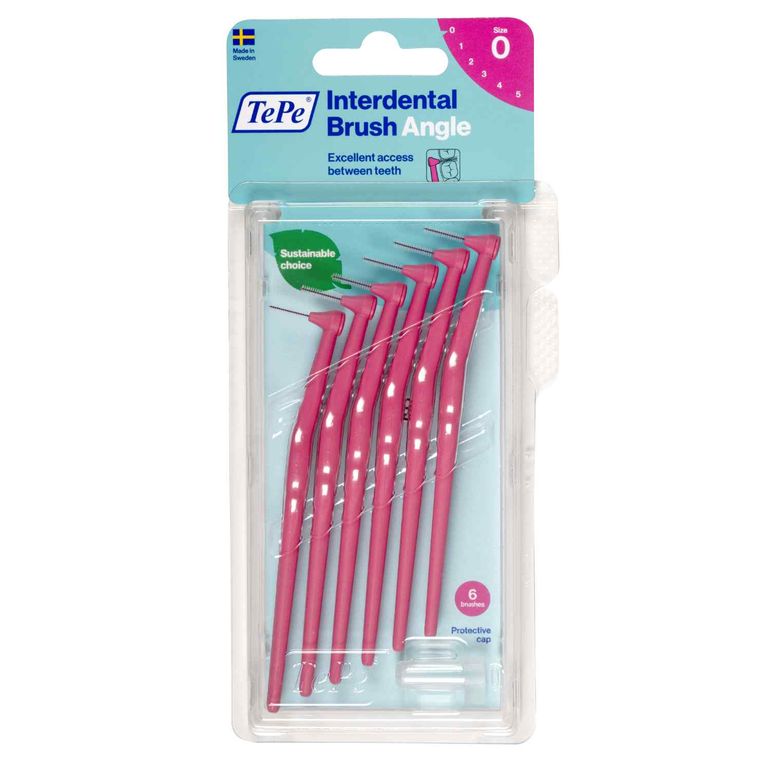
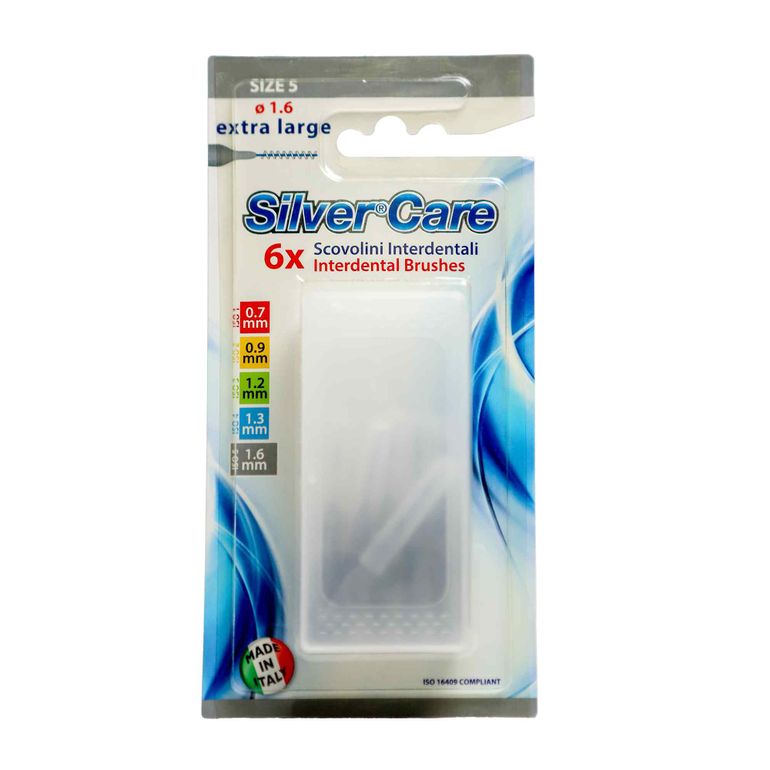
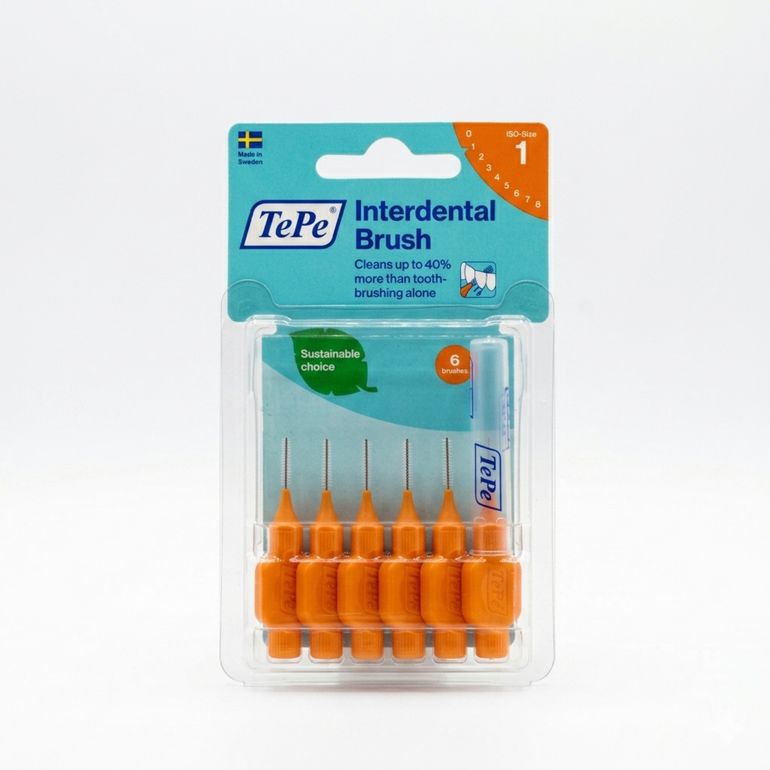
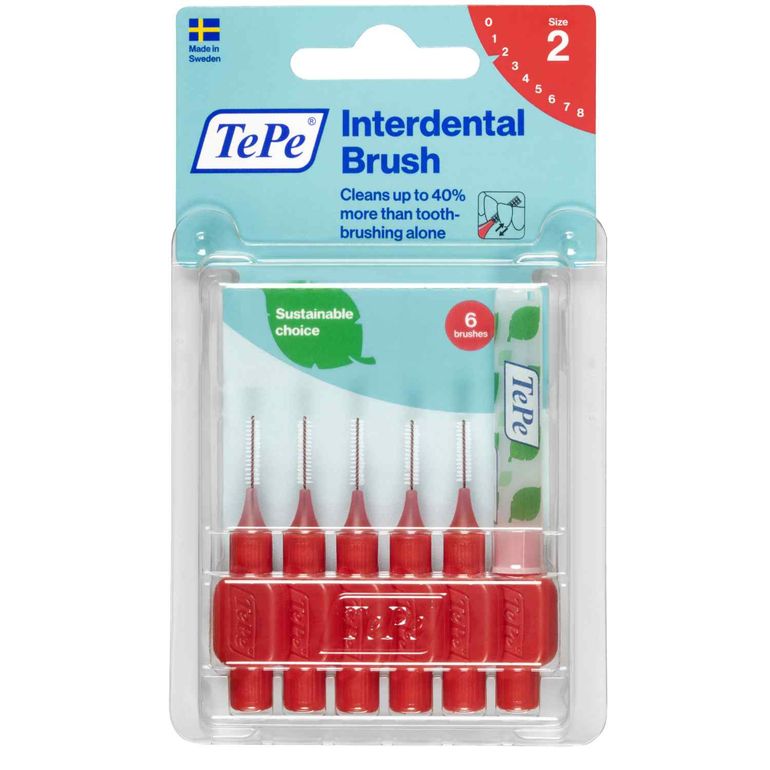
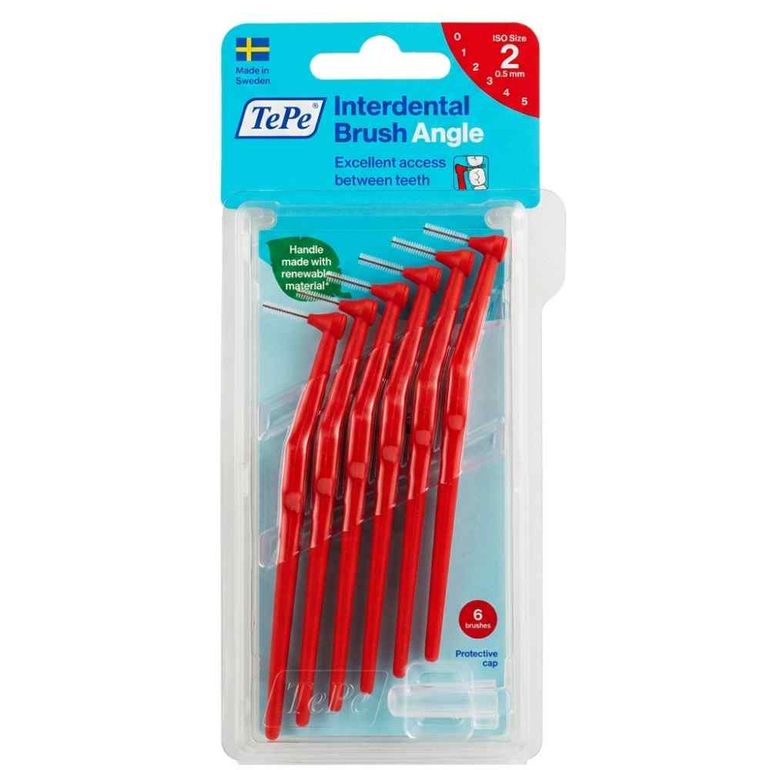
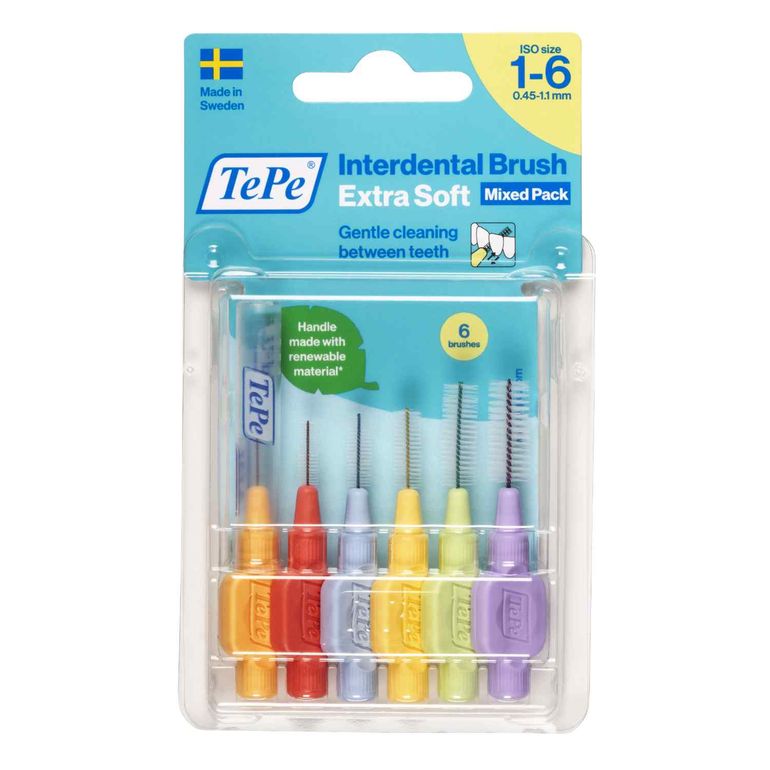
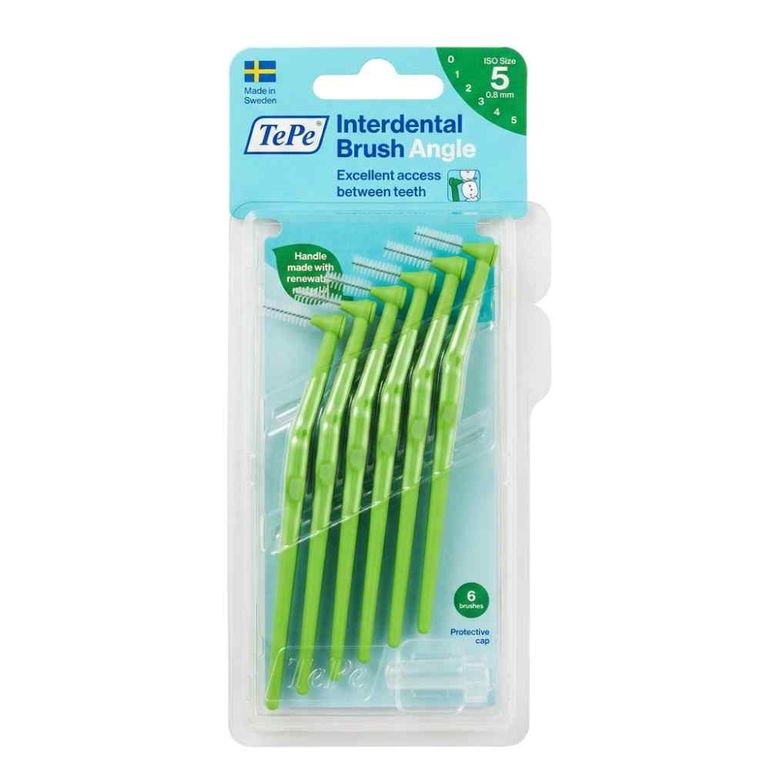
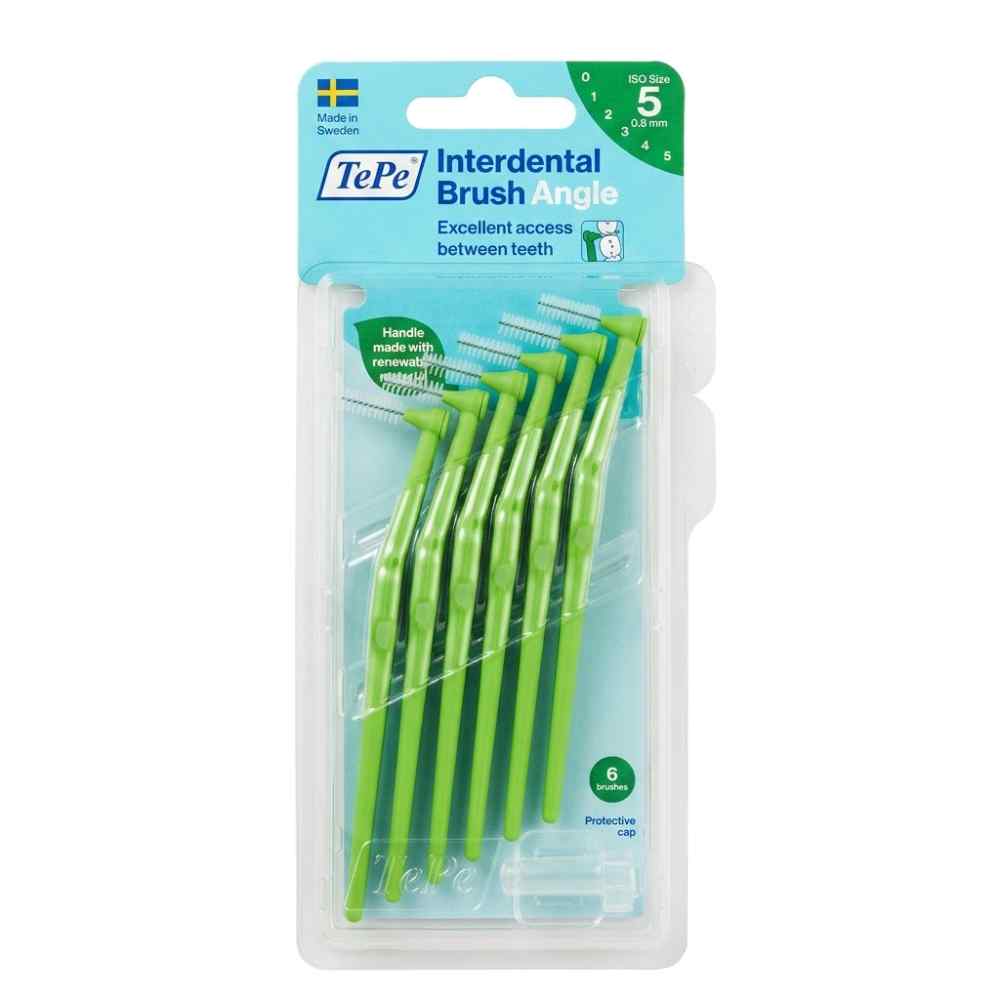
TePe Angle Interdental Brushes Green (0.8 mm / Size 5) are professionally engineered oral hygiene devices designed for the mechanical removal of pathogenic dental plaque and food debris from proximal tooth surfaces. Packaged in a pack of six pieces, this specialized dental instrument features a long, ergonomic handle and a pre-angled brush head. It is clinically indicated for individuals with wide interdental spaces, orthodontic appliances, fixed bridge work, or dental implants, as well as patients undergoing periodontal therapy to manage gingivitis and prevent periodontitis.
Key Medical Benefits & Clinical Value
1. Advanced Mechanical Plaque Control
Standard toothbrushes fail to reach the proximal surfaces of the dentition, leaving up to 40% of the tooth surface uncleaned. The 0.8 mm cylindrical bristle configuration physically disrupts the oral biofilm trapped within the interproximal spaces. Regular mechanical disruption of this biofilm is critical in lowering the concentration of anaerobic bacteria responsible for localized tissue destruction.
2. Prophylaxis and Management of Periodontal Disease
Plaque accumulation in the interdental gingival sulcus triggers an inflammatory response, leading to gingival bleeding, swelling, and pocket formation. Utilizing these interdental brushes assists in reducing gingival indices, reversing early-stage gingivitis, and stabilizing attachment loss in patients diagnosed with chronic periodontitis.
3. Structural Optimization for Posterior Access
The anatomical configuration of the molar and premolar regions presents significant accessibility barriers for standard dental floss. The pre-angled neck allows for an optimal orthogonal approach from both the buccal (outer) and lingual/palatal (inner) aspects, ensuring comprehensive cleaning without exerting trauma on the surrounding soft tissues.
Design Specifications & Safety Mechanisms
Material Integrity and Mechanical Composition
TePe Angle Interdental Brushes are manufactured utilizing premium, biocompatible materials designed to optimize cleaning efficiency while minimizing tissue micro-trauma.
Plastic-Coated Stainless Steel Wire: The central core wire is coated with a high-grade polyurethane plastic layer. This coating ensures that the metal core does not come into direct contact with tooth structures, exposed root surfaces, or titanium implant abutments, preventing galvanic shock, surface scratching, and mechanical hypersensitivity.
High-Density Filament Distribution: The brush head consists of precisely spaced polyamide filaments optimized for resilience and flexibility, allowing the brush to conform smoothly to the varied concavities of the proximal tooth surfaces.
Ergonomic Polypropylene Handle: The flat, elongated handle profile is mechanically optimized to provide a secure, non-slip grip, allowing for precise tactile feedback and controlled insertion pressure.
Usage Instructions & Clinical Precautions
Step-by-Step Patient Administration Guide
To avoid mechanical damage to the interdental papilla and ensure thorough debris clearance, adhere to the following clinical protocol:
Selection Verification: Confirm that the 0.8 mm (Size 5) diameter matches the anatomical dimensions of the targeted interdental space. The brush must insert smoothly without forced manual pressure.
Insertion: Align the brush horizontally at the gum line. Gently insert the brush head into the space between the teeth. Do not twist or force the device dynamically.
Mechanical Cleansing: Move the brush full-length back and forth through the interdental space 2 to 3 times.
Posterior Adaptation: For the posterior molars, access the space carefully from both the cheek side and the tongue side to clear hidden anatomical recesses.
Post-Use Maintenance: Rinse the filaments thoroughly under clean running water after cleaning each space. Allow the brush to air dry. Replace the brush immediately once the filaments show signs of mechanical splay or the core wire exhibits bending.
Safety Precautions
Avoid Excessive Force: Forcing a brush into a space that is anatomically too narrow can cause acute lacerations to the gingival tissue and permanent blunting of the interdental papilla.
Supervision: Pediatric usage requires direct clinical instruction and parental supervision to avoid improper manipulation.
Initial Gingival Bleeding: Mild bleeding may occur during the initial days of incorporation into the oral care routine, indicating active localized inflammation. If this bleeding persists beyond 7 to 10 days of consistent use, discontinue application and consult a licensed dental professional.





 Brands