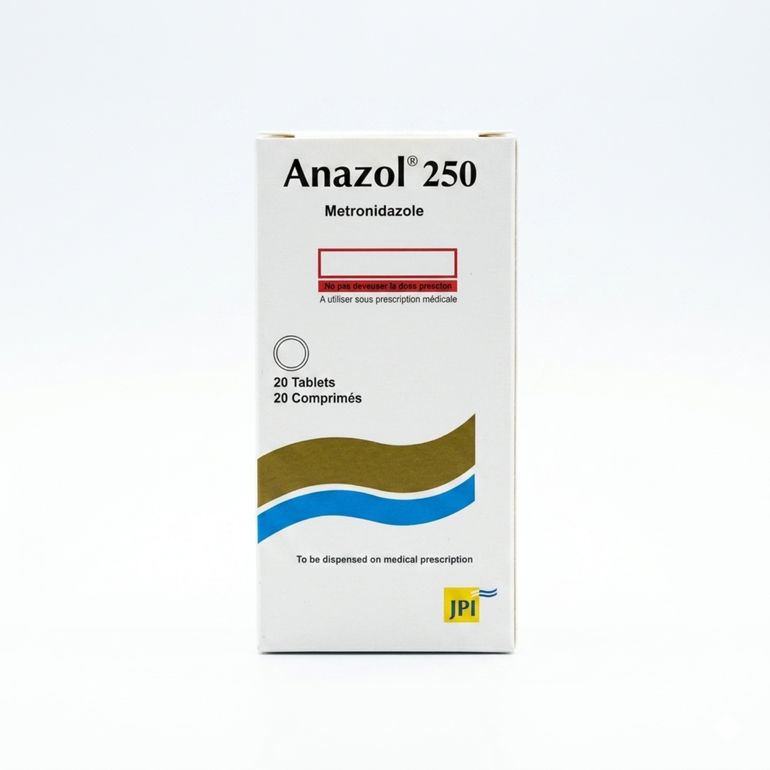
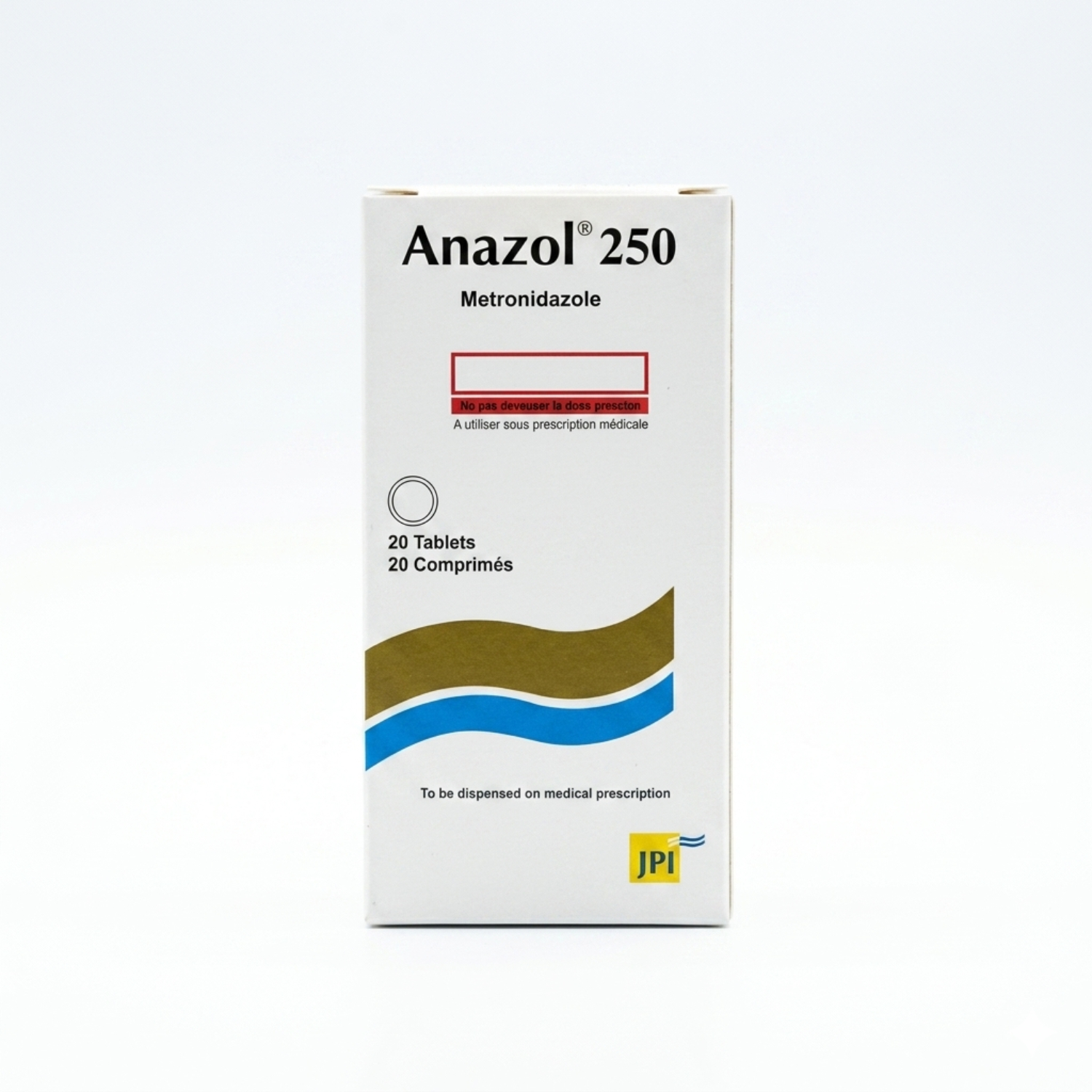
Anazol 250 mg is a prescription anti-infective pharmaceutical preparation containing metronidazole as its active ingredient. Belonging to the nitroimidazole class of synthetic antimicrobial agents, Anazol is formulated for systemic oral administration to eradicate specific anaerobic bacterial and protozoal micro-organisms. It is routinely indicated in clinical practice for gastrointestinal, intra-abdominal, and urogenital infections caused by susceptible pathogens.
Each commercial package contains 20 film-coated tablets, with each tablet providing a standardized dose of 250 mg metronidazole.
Active Ingredient & Mechanism of Action
Composition
-
Active Substance: Metronidazole USP/BP (250 mg per tablet).
-
Dosage Form: Oral solid tablet.
-
Packaging Unit: 20 tablets per box.
Pharmacodynamics & Mode of Action
Metronidazole is a prodrug that relies on metabolic activation within target micro-organisms.
-
Cellular Entry: The active compound passively diffuses across the cell walls of anaerobic bacteria and sensitive protozoa.
-
Reductive Activation: Within anaerobic environment, metronidazole undergoes intracellular reduction by electron transport proteins (such as ferredoxin).
-
DNA Structure Disruption: This reaction generates short-lived, highly reactive cytotoxic intermediate radicals that bind to microbial DNA.
-
Cell Death: The binding causes single- and double-strand DNA breakage, inhibiting nucleic acid synthesis and resulting in rapid micro-organism cell death.
Metronidazole exhibits potent antimicrobial activity against anaerobic organisms including Bacteroides fragilis, Clostridium species, Fusobacterium species, as well as protozoa such as Giardia lamblia, Entamoeba histolytica, and Trichomonas vaginalis.
Clinical Indications & Therapeutic Uses
Anazol 250 mg is prescribed by healthcare professionals for the management and treatment of targeted anaerobic bacterial and parasitic conditions, specifically within the digestive tract and pelvic cavity:
-
Intestinal & Hepatic Amebiasis: Effective against invasive infections caused by Entamoeba histolytica, including acute amebic dysentery and amebic liver abscesses.
-
Giardiasis: Eradicates Giardia lamblia protozoal infections affecting the small intestine.
-
Anaerobic Gastrointestinal & Intra-Abdominal Infections: Indicated for severe intra-abdominal infections, including peritonitis and intra-abdominal abscesses caused by sensitive Bacteroides species.
-
Trichomoniasis: Treats symptomatic and asymptomatic urogenital infections caused by Trichomonas vaginalis.
-
Bacterial Vaginosis: Management of vaginal dysbiosis associated with Gardnerella vaginalis and anaerobic species.
-
Surgical Prophylaxis: Administered pre- and post-operatively to lower the incidence of post-operative anaerobic bacterial wound infections following colorectal procedures.
Dosage, Administration & Regimen Guidelines
Anazol 250 mg tablets must be taken exactly as directed by a qualified physician or healthcare provider. Dosage regimens vary depending on the patient's age, body weight, liver function, and the nature of the targeted infection.
General Administration Protocol
-
Oral Route: Tablets should be swallowed whole with a full glass of water.
-
Timing relative to meals: It is advisable to administer Anazol 250 mg during or immediately after meals to minimize gastrointestinal discomfort or nausea.
-
Course Completion: Patients must complete the full prescribed treatment duration, even if symptoms subside early, to prevent antimicrobial resistance or clinical relapse.
Safety Precautions, Contraindications & Drug Interactions
Absolute Contraindications
-
Hypersensitivity: Known hypersensitivity or allergic reaction to metronidazole, other nitroimidazole derivatives, or any excipient in the formulation.
-
First Trimester of Pregnancy: Contraindicated during the first trimester of pregnancy due to potential risk to fetal development.
Clinical Warnings & Precautions
-
Alcohol Consumption (Disulfiram-Like Reaction): Patients must strictly avoid alcohol and medications containing ethanol/propylene glycol during treatment and for at least 48 hours following the final dose. Concomitant use can cause severe disulfiram-like reactions, including abdominal cramps, nausea, vomiting, flushing, and tachycardia.
-
Central Nervous System (CNS) Effects: Metronidazole can cause neurological toxicity. Use with caution in patients with active or severe central nervous system disorders (e.g., epilepsy, peripheral neuropathy). Stop therapy immediately if neurological symptoms develop.
-
Hepatic Impairment: Patients with severe hepatic dysfunction metabolize metronidazole at a reduced rate; dose adjustments and monitoring are required.
Drug Interactions
-
Oral Anticoagulants (e.g., Warfarin): Metronidazole potentiates the anticoagulant effect of warfarin, increasing prothrombin time. Monitoring of INR/prothrombin levels is required.
-
Lithium: Concurrent use may lead to elevated serum lithium concentrations and risk of lithium toxicity. Serum lithium and creatinine levels should be monitored.
-
Disulfiram: Psychotic reactions have been reported in patients using metronidazole and disulfiram concurrently. Do not co-administer within 2 weeks of disulfiram use.
Possible Adverse Reactions
Common and transient side effects may include:
-
Mild gastrointestinal symptoms (nausea, metallic taste, loss of appetite, abdominal cramping).
-
Headaches or dizziness.
-
Darkening or reddish-brown discoloration of urine (benign and clinically insignificant).
Storage & Product Specifications
| Specification |
Details |
| Product Name |
Anazol 250 mg |
| Active Ingredient |
Metronidazole (250 mg per tablet) |
| Therapeutic Class |
Antimicrobial / Antiprotozoal / Antibacterial |
| Prescription Status |
Rx - Prescription Medicine Only |
| Pack Size |
20 Tablets |
| Storage Conditions |
Store below 30°C in a cool, dry place. Protect from light and moisture. Keep out of reach of children. |





 Medication