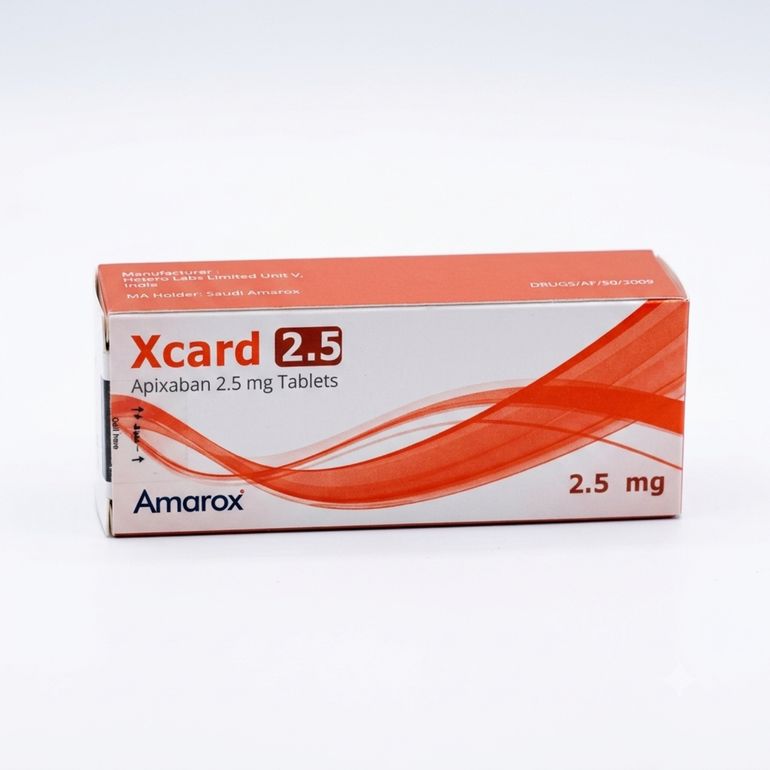
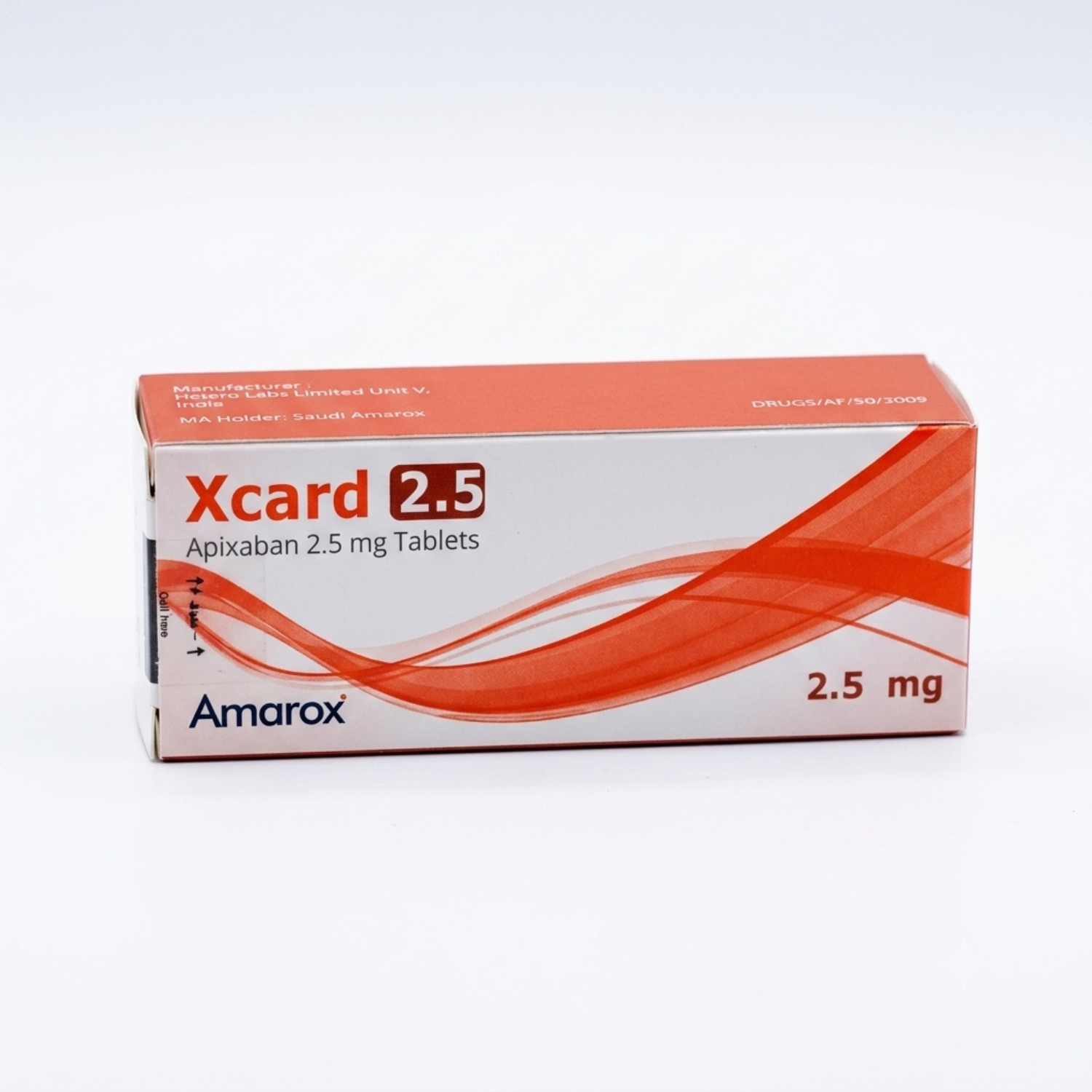
Xcard contains the active ingredient Apixaban, which belongs to a class of medicines called Direct Oral Anticoagulants (DOACs). It works by blocking Factor Xa, a key enzyme in the blood clotting process. By inhibiting this factor, Xcard reduces the blood's ability to form harmful clots without significantly impacting the body's natural healing for minor cuts.
Key Uses and Indications
Xcard 2.5mg is typically prescribed for several specific medical scenarios:
Atrial Fibrillation (AFib): To prevent strokes and systemic embolism in patients with non-valvular atrial fibrillation.
Post-Surgery Recovery: To prevent Deep Vein Thrombosis (DVT) and Pulmonary Embolism (PE) in patients who have recently undergone hip or knee replacement surgery.
Treatment of DVT and PE: To treat existing blood clots in the legs or lungs and prevent them from recurring.
Long-term Prevention: Often used as a maintenance dose for patients who need long-term protection against blood clots after initial treatment.
Benefits of Xcard 2.5mg
Predictable Results: Unlike older blood thinners (like Warfarin), Xcard does not require frequent blood tests (INR monitoring).
Dietary Flexibility: There are fewer food interactions; for example, you don't need to strictly monitor your intake of leafy greens.
Ease of Use: The 2.5mg film-coated tablets are small and easy to swallow, and they can be taken with or without food.
Dosage and Administration
Xcard 2.5mg is usually taken twice daily (once in the morning and once in the evening).
Consistency is Key: Take your dose at the same time every day to maintain a steady level of the medication in your bloodstream.
Missed Dose: If you miss a dose, take it as soon as you remember. However, never take two doses at once to make up for a forgotten one.
Medical Consultation: Always follow the specific dosage prescribed by your cardiologist or healthcare provider at pharmacies.
Precautions and Side Effects
While Xcard is highly effective, it does increase the risk of bleeding. Users should be aware of:
Signs of Bleeding: Unusual bruising, nosebleeds, or pink/red urine should be reported to a doctor immediately.
Surgery/Dental Work: Inform your dentist or surgeon that you are taking Xcard, as you may need to pause the medication temporarily.
Interactions: Avoid taking aspirin or NSAIDs (like Ibuprofen) unless directed by your doctor, as these can further increase bleeding risks.





 Medication